
Issue
Conservation
On This Page:
Open Page Nav
Photo: Jenifer Veloso / Charles Stewart Mott Foundation
Photo: Jenifer Veloso / Charles Stewart Mott Foundation
Highlights
The Mott Foundation’s conservation funding has helped grantees to:
- Protect over 400,000 acres in the Great Lakes basin and more than 15 miles of Great Lakes shoreline.
- Close the Big U.P. Deal, the largest land conservation project in Michigan history.
- Launch the Great Lakes Revolving Loan Fund.
- Develop an accreditation system for land conservancies nationwide.
- Inform policies that improved thousands of miles of rivers.
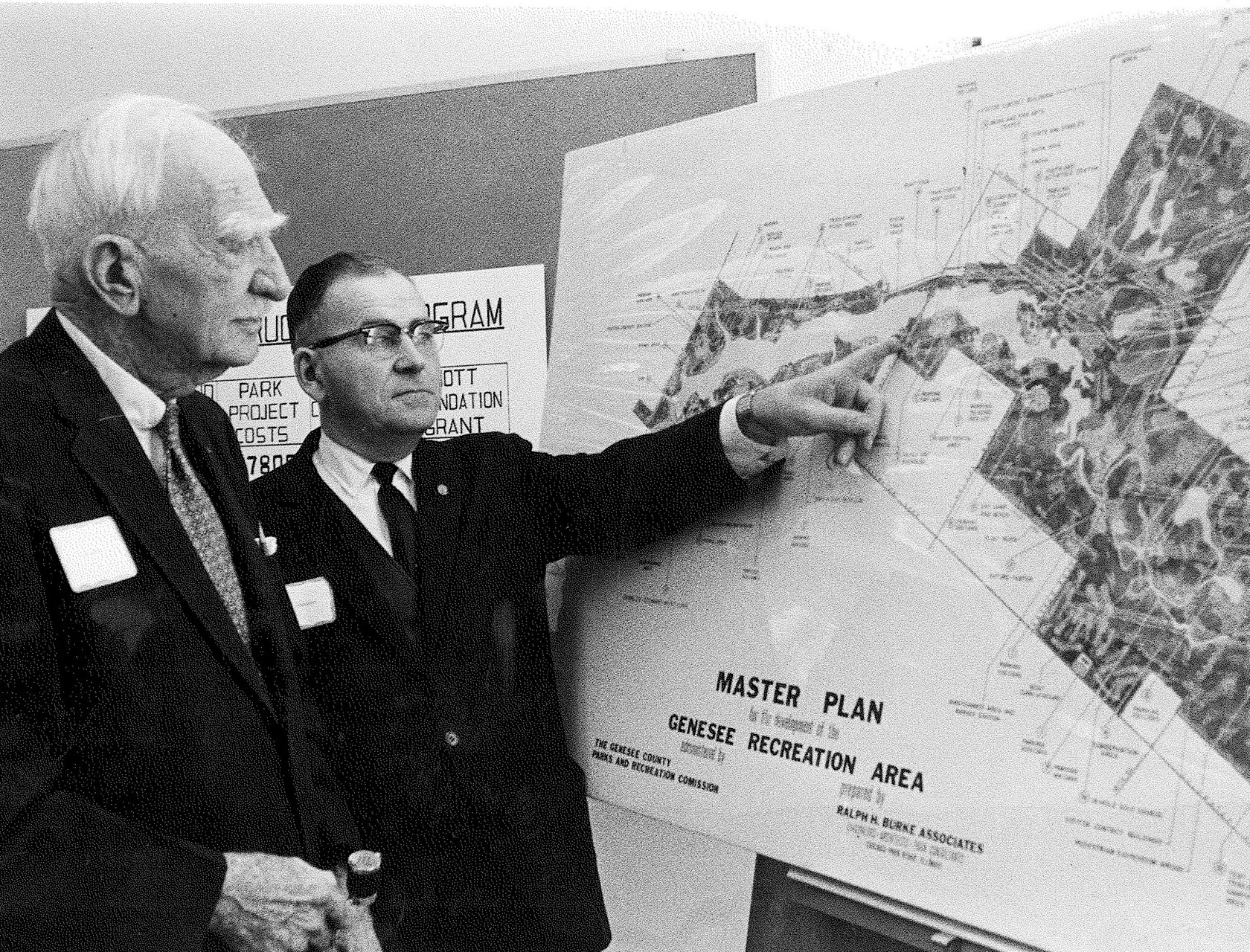
The seeds of the conservation work were planted even earlier. In 1965, Mott provided a $6.1 million grant to the Michigan chapter of The Nature Conservancy to purchase land that would become Mott Lake Park in Flint. Eight years later, the Foundation provided another $3 million to TNC to purchase land that would become Holloway Reservoir Regional Park.
Those parks were the pillars of what would become the Genesee County Parks system, the largest county park system in Michigan. The county has conserved over 11,000 acres of land to protect green spaces and provide a range of recreational activities.
Over the past four decades, Mott’s funding has helped to protect over 400,000 acres of forests, lakes and wetlands in the Great Lakes basin, and more than 15 miles of Great Lakes shoreline. Nationally, advocacy work by Mott grantees helped bring about policy changes that spurred improvements to thousands of miles of rivers.
Most of the projects our Environment program has supported were focused on two overarching issues: protecting and restoring the Great Lakes ecosystem; and reforming international finance as a means of promoting global sustainability. Conserving critically important ecosystems has been a core value from the start.
In that sense, the program reflects the views of C.S. Mott, who was an outdoorsman, farmer and conservationist. In 1970, at the dedication of the For-Mar Nature Preserve in Burton, Michigan, Mott said, “Nature is a pretty good teacher of many things.”
Conservation that benefits nature and people
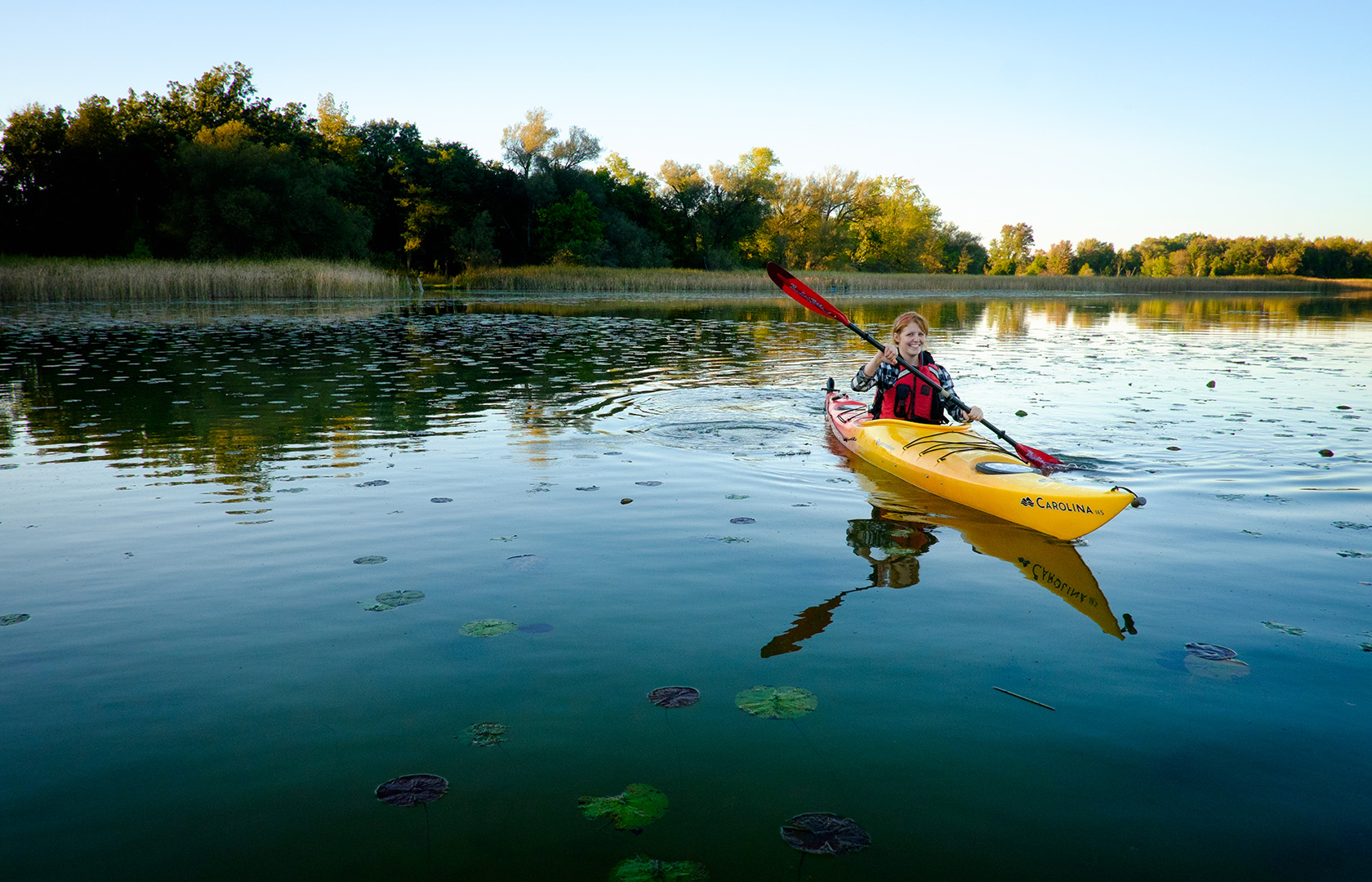
Initially, Mott’s Environment program focused solely on protecting biological diversity, but that work expanded to include a focus on people. In recent years, Mott has supported projects that protected natural resources while also creating new recreational opportunities, supporting sustainable forestry and helping communities adapt to the effects of climate change, said Sam Passmore, director of Mott’s Environment program since 2008.
“The sector has come to focus more on multiple benefits from conservation projects, not just biodiversity,” Passmore said. “Conservation work in the U.S. has become more and more community-centered so that it is protecting nature and people.”
In the 1990s, Mott grantees produced state-of-the-art maps of eco-regions, which paved the way for conservation work in two large areas of the U.S: the Great Lakes basin and a six-state area of the southeastern U.S. — encompassing Georgia, Alabama, Louisiana, North Carolina, South Carolina and Tennessee — that is one of the most biologically diverse regions on Earth.
The work of Mott grantees in the southeast U.S. produced several success stories. It has:
- Led to improvements in 300 miles of the Catawba-Wateree River, which crosses North and South Carolina.
- Spurred wetland restoration projects that slowed land loss in the Mississippi River delta.
- Informed new policies that enhanced river conservation efforts nationwide.
- Helped secure $5.3 billion for coastal restoration work in Texas, Louisiana, Mississippi, Alabama and Florida following the 2010 BP oil spill in the Gulf of Mexico.

Photo: U.S. Coast Guard
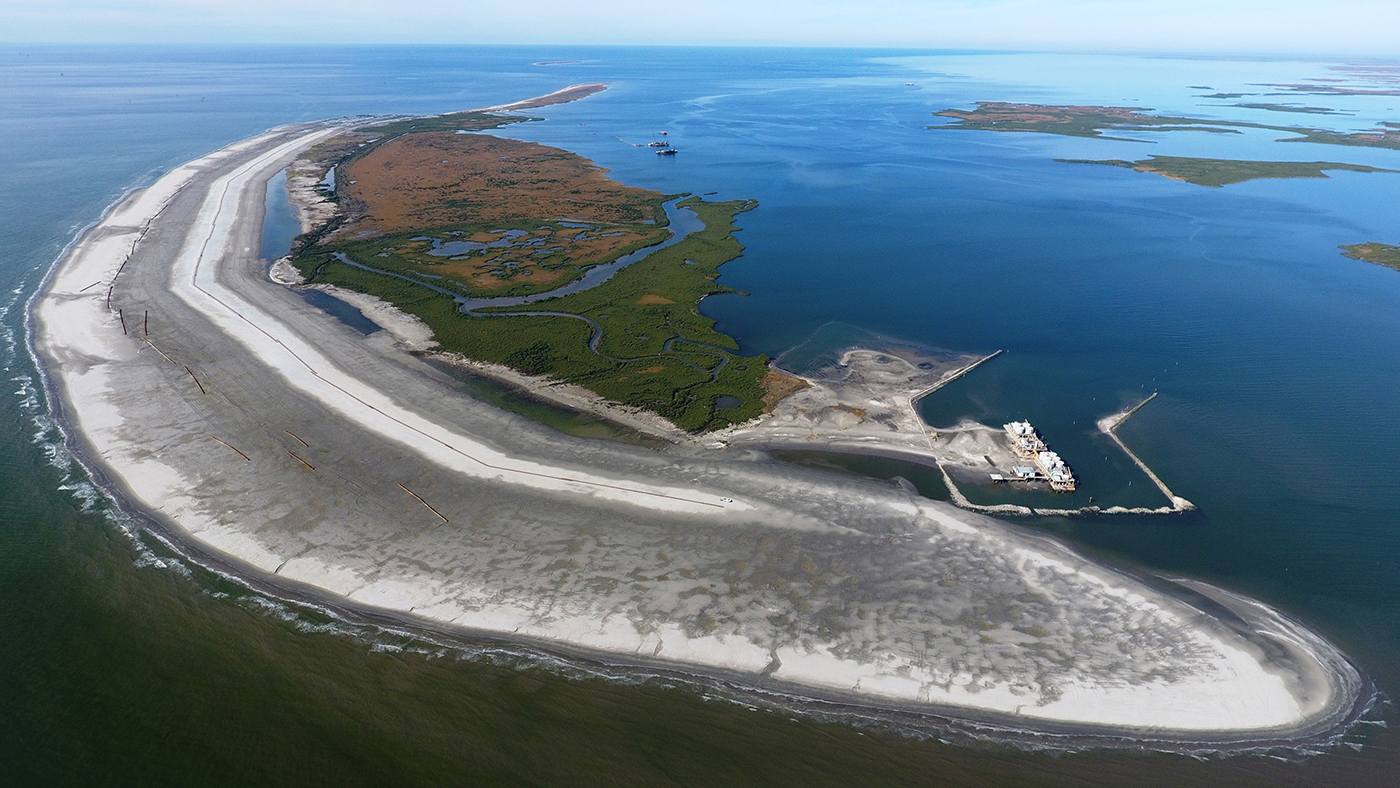
Photo: U.S. Army Corps of Engineers
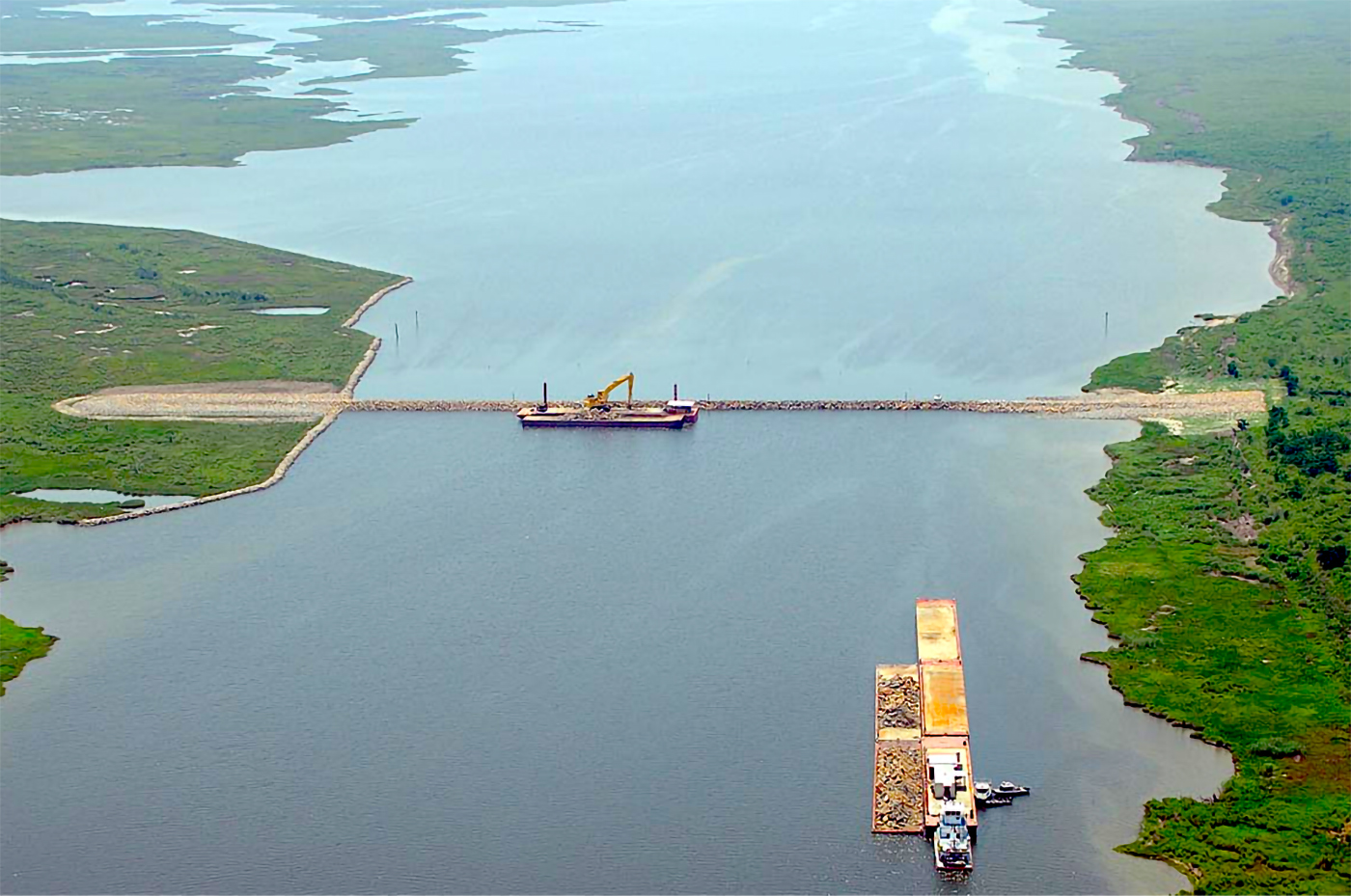
Photo: U.S. Army Corps of Engineers

Photo: Mobile Baykeeper

Photo: Georgia Water Coalition
1/5
In the early 2000s, the Foundation shifted most of its site-based conservation work to the Great Lakes region. Since then, Mott’s grantees and their partner organizations have:
- Conserved 15 miles of pristine Great Lakes shoreline.
- Protected more than 400,000 acres of ecologically important sites in the basin.
- Saved Humbug Marsh on the Detroit River from becoming a housing development and made it the cornerstone of the nation’s first international wildlife refuge.
- Preserved 271,000 acres of forest, lakes and rivers in Michigan’s Upper Peninsula in 2003. Known as the Big U.P. Deal, it was the largest land conservation project in Michigan history. The project also allowed timber harvesting to continue in some areas, which saved jobs, provided tax revenue for nearby communities, and preserved an industry that is key to the region’s economy and cultural identity. (Read related article.)
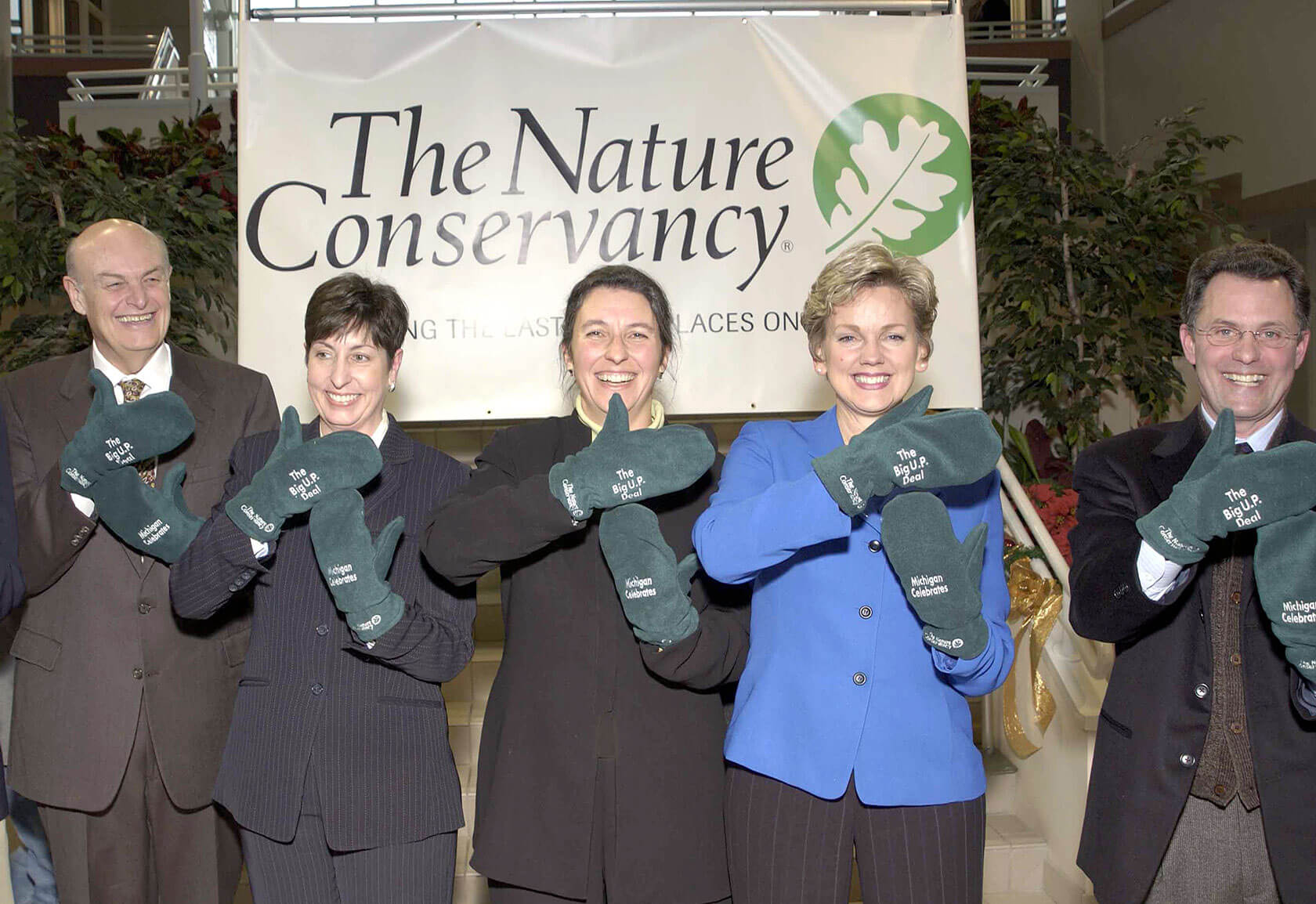
Mott provided TNC with a total of $10 million in grants to support the Big U.P. Deal, which was finalized in 2010.
Helen Taylor, state director of TNC in Michigan and a Mott Trustee, said the Foundation’s support for the Big U.P. Deal inspired other funders to back the project. She said the late William S. White, Mott’s longtime president and CEO, and Mott staff saw a need to protect a unique landscape and took bold action.
“The scale and boldness with which they acted brought all the other foundations together to do conservation in a new way,” Taylor said. The Big U.P. Deal “is still the largest conservation project in Michigan’s history.”
Around the same time, the Foundation provided a $7.5 million grant to keep 6,000 acres of coastal land in northwest Lower Michigan from being turned into a luxury golf course. That site became Arcadia Dunes: The C.S. Mott Nature Preserve. It is a model of ecological restoration and access for people with diverse interests.
Mott provided funding to help the Grand Traverse Regional Land Conservancy acquire the site after the late Claire Mott, a granddaughter of Charles Stewart Mott and a trustee of the Mott Foundation, walked the beach with Bill White, her late husband who served for decades as president and CEO of the Foundation and chair of its board of trustees.
“Here was this gorgeous beach, untouched, with not a lot of footprints on it and no one there. It made quite an impression, particularly with the dunes behind it,” White said in a 2018 article. “I remember Claire and I talking about it, as the Foundation seemed to be a little over-committed at the time in terms of spending. But she said, ‘Well, you can always fund this or that, but rarely do you have an opportunity to save something like this for all time. This is a major legacy.’”
Some of Mott’s conservation-related grantmaking didn’t focus on specific sites — it strengthened the entire field of land conservation in the U.S.
In 2003, a national land conservancy was rocked by a scandal that cast doubt over the field. To address the concerns of government agencies and the public, Mott supported a project by the Land Trust Alliance that developed an accreditation system for land conservancies nationwide. Passmore said it restored trust in land conservancies, which headed off excessive government regulation and gave donors a measure of confidence that their gifts of land or money would be put to good use.
Innovative funding that produces big returns
One of the Foundation’s most innovative and successful conservation initiatives was the establishment of the Great Lakes Revolving Loan Fund in 2001. The fund provides short-term financing to help land trusts and government agencies acquire natural habitat and freshwater resources of “high ecological significance.”
Mott provided a $7 million grant to help The Conservation Fund launch the Great Lakes Revolving Loan Fund. (Read related article.)
Since 2001, the fund has been used to finance all or part of 67 land acquisitions in Great Lakes states and the Canadian Province of Ontario. As of July 2025, the fund had been used to conserve 136,000 acres of property, valued at $176 million, including:
- Several large waterfront parcels that became new state parks — or expanded existing parks — along Lake Erie, Lake Michigan and Lake Superior.
- 2,500 acres of coastal boreal forest on the north shore of Lake Superior, including 13 miles of undeveloped shoreline. (Read related article.)
- A 590-acre island in Lake Erie that features 2.5 miles of undeveloped shoreline.
- The largest land acquisition project in Wisconsin history, 72,423 acres of forest along the Brule and St. Croix rivers.
- More than 100,000 acres of working forests in Wisconsin, Michigan and New York, where sustainable forestry practices were implemented to protect ecosystems while maintaining logging-related jobs.
Passmore said the Great Lakes Revolving Fund has exceeded expectations. “The geographic spread and diversity of the projects, the number of acres protected, and the amount of money leveraged for additional land preservation is breathtaking,” he said.
Mott also supported a 20-year national campaign that made aging hydropower dams comply with modern environmental standards, which reduced impacts on rivers. Launched in 1992 by longtime grantee American Rivers, the campaign improved water quality and restored fish and wildlife habitat in more than 2,000 miles of rivers in the Great Lakes and southeastern United States. The reforms also forced utilities to remove dozens of obsolete dams and restore thousands of acres of natural habitat on adjacent lands. (Read related article.)
Urban conservation
In 2021, Mott expanded the scope of its conservation-related work to focus on urban areas in the Great Lakes region. The Foundation provided a $3 million grant to The Conservation Fund to launch a project that will develop urban parks. It aims to level the playing field between affluent communities, where parks and green spaces are common, and lower-income communities, where parks are less common and more crowded.
The Foundation also supported the Michigan Spark Grants program, a joint effort by the Council of Michigan Foundations and the state Department of Natural Resources to improve outdoor recreation facilities in communities most affected by the COVID-19 pandemic. The program has provided a total of $24 million in grants to improve parks and other public recreation facilities in 29 underserved communities.
In a separate but similar urban conservation project, Mott provided $18 million to support the development of a new state park in downtown Flint. Genesee County, where Flint is located, was the only Michigan county without a state park in 2025.
Flint’s state park will feature miles of trails, extensive green space, an amphitheater and boat launches along a three-mile stretch of the Flint River that winds through the city. That part of the river was turned into a concrete channel in the 1960s to prevent flooding. The concrete walls along the river will remain, but the river channel will be naturalized and made more user-friendly for anglers and paddlers.
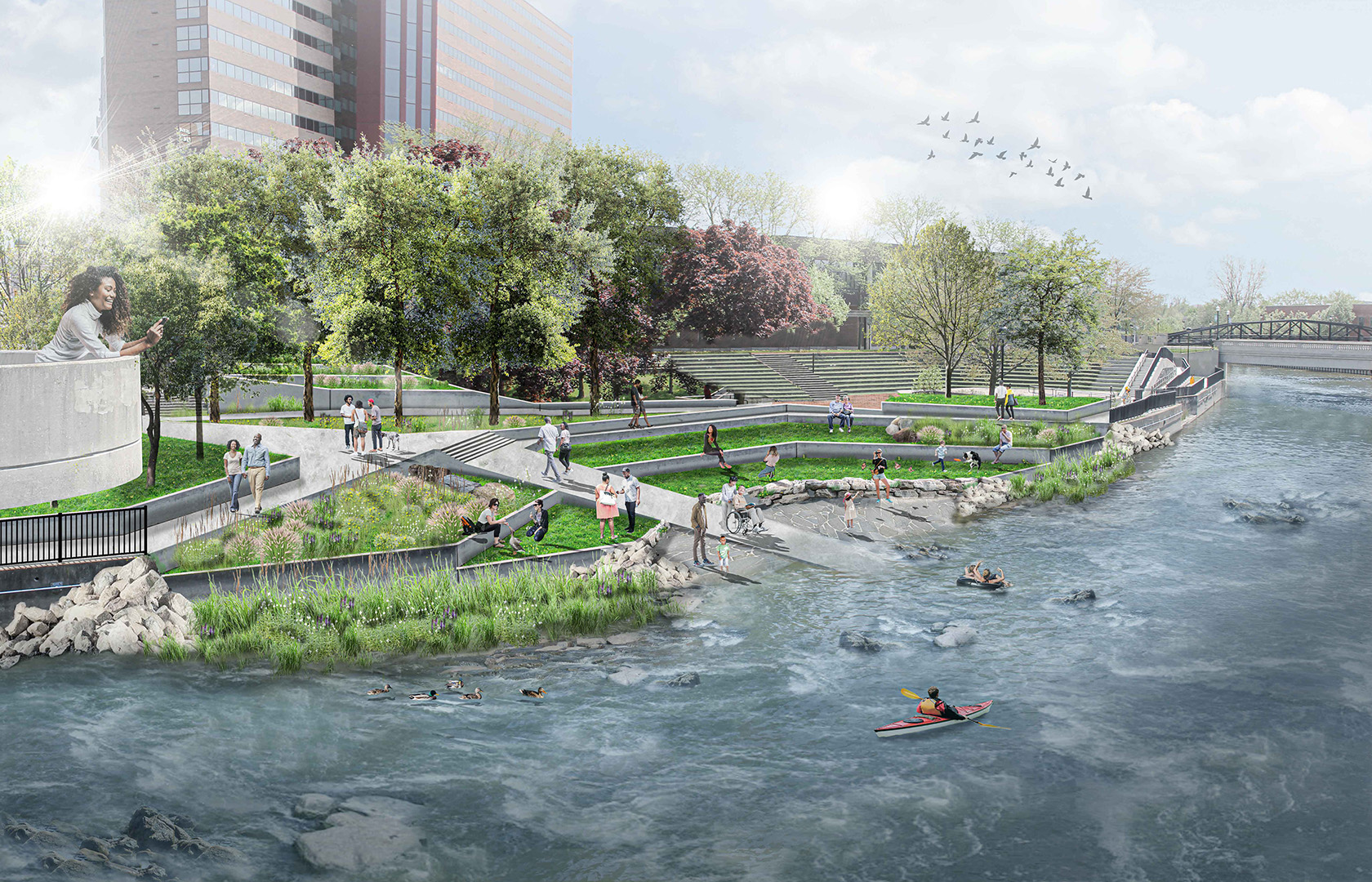
By helping to draw residents and visitors to the city, the state park is expected to contribute to Flint’s economic revitalization.
“The new state park will bring Mott’s site-based conservation work full circle,” said Ridgway White, president and CEO of the Foundation. “It began in Flint 60 years ago, with the Foundation providing the funds to create Genesee County’s first park, and Mott begins its second century of conservation-related grantmaking as a major funder of Flint’s first state park.”