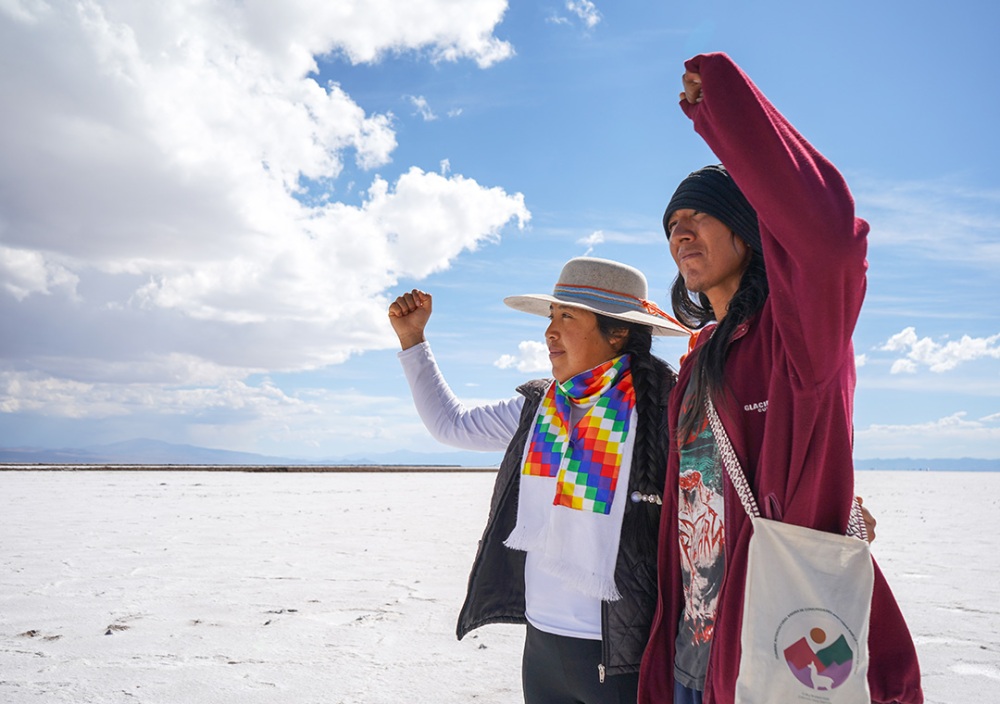
Mining that fuels the global transition to renewable energy may threaten Indigenous communities

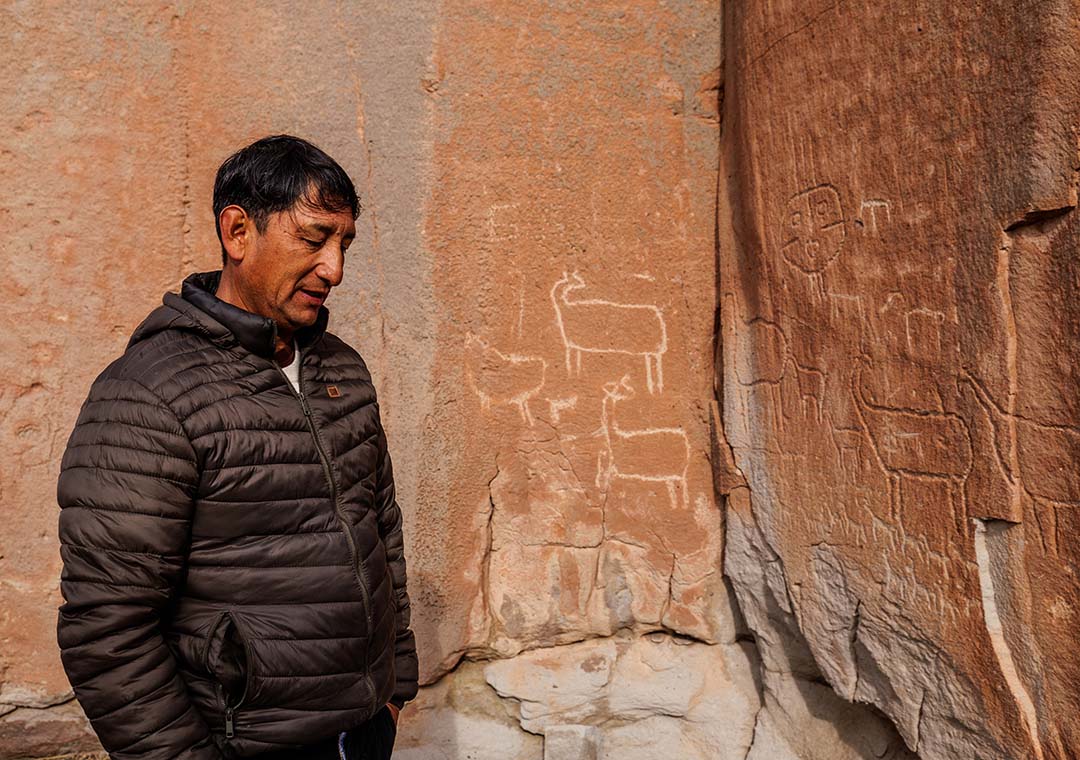
Key takeaways:
In Antofagasta de la Sierra, the Atacameños del Altiplano community has spent 25 years fighting to save their water. They’ve already lost a river.
The Trapiche River was once a large, flowing river in the Salar del Hombre Muerto salt flat. After decades of extractive lithium mining, the river has dried up completely.
The Fenix lithium mine is the longest-operating mine in Salar del Hombre Muerto. The mine’s water consumption is estimated at about 7.2 million liters per day, nearly the equivalent of three Olympic-sized swimming pools. Ten more lithium mining projects are being proposed for this Indigenous territory.
As the world shifts from fossil fuels to renewable energy, communities grapple with how to deal with the impacts on their local environments. Without water, there is no life.
Multilateral development banks (MDBs), such as IDB Invest and the International Finance Corporation, often help finance large mining and energy projects. MDBs are backed by public money from member governments, and their financing — including loans to private companies — is meant to advance development. But when the goal is broad global development, communities living closest to projects can end up suffering harms.
Mott grantee Fundación Ambiente y Recursos Naturales (FARN) has been working with local communities in Argentina to use MDBs’ accountability mechanisms to help ensure development projects are transparent, accountable and equitable.
In the video below, community members from Salar del Hombre Muerto and Salinas Grandes describe the impacts on their land and lives, and why equitable development finance matters.
As part of the Lithium Triangle, Argentina holds some of the world’s largest lithium reserves — a mineral central to the global clean energy transition. But for the Indigenous communities who live here, the extraction of lithium raises urgent questions about water, land and consent.
The way money flows from governments, MDBs and private institutions is complex. The video below explains the process.
This video shows how development finance flows from governments, MDBs and private investors to projects and the communities they affect. It was created by the Mott Foundation Environment and Communications teams using Claude by Anthropic to develop the illustrations and animation. Mott staff directed the work and reviewed the content for accuracy.
FARN is a nongovernmental organization based in Argentina that promotes sustainable development at the national and international levels through research, advocacy, strategic litigation and on-the-ground work with communities.
Leandro Gómez, who coordinates FARN’s Investments and Rights Program, discusses safeguard gaps between multilateral banks and international standards, and why communities need to be consulted before projects break ground — not after.
“Multilateral banks play an extremely important role in the energy transition,” Gómez said. “They help shape the transition model itself, and at the same time they support the development of specific projects through technical cooperation, by creating the conditions for these projects to move forward on the ground.”
In this interview, Leandro Gómez, coordinator of FARN’s Investments and Rights Program, walks through how the organization monitors MDB financing in Argentina’s lithium region, and what happened when the IFC — the World Bank Group’s private-sector lending arm — backed the Sal de Vida project in Salar del Hombre Muerto.
In early 2026, the Mott Foundation launched a new strategic plan. Under the new Environment program plan, one initiative focuses on development finance — work the Foundation has supported for almost 40 years.
That history started with a basic question: When a development bank or government funds a dam, a mine or a power plant, who actually gets consulted, who benefits and who lives with what happens after? Grantees and the communities they work with have spent decades pushing for answers — winning rights to information and consultation, accountability from development banks and, more recently, commitments to remedy harm when it occurs.
Today, that same question is playing out in a new arena: the energy transition. Hundreds of billions of dollars are moving, or should be moving, into clean energy. But that money isn’t always moving fast enough, and it doesn’t always move without harming the communities closest to the projects.
The Foundation’s current strategy addresses this through three connected efforts. One pushes money away from fossil fuels and toward low-carbon alternatives, holding banks to their commitments to align with the Paris Agreement. A second focuses on safeguards — making sure that communities have an early say in a project’s design and that real mechanisms for redress exist when harm happens anyway. The third centers on “country platforms,” currently in Brazil and South Africa, which coordinate international finance behind a country’s own transition plans, with an emphasis on keeping community rights and environmental protections at the center as those plans evolve.
No single organization can hold a global bank accountable on its own. That’s why we support groups working at the global level alongside communities in places like Antofagasta de la Sierra. When they work together, the banks have to listen.”![Person wearing glasses, a dark suit jacket and white shirt, standing in front of a vivid orange background with a large circular abstract artwork.]()
Theodoros Chronopoulos, Mott Foundation program officer
The Mott Foundation supports work that advances transparent and accountable development finance that protects ecosystems and communities.
For communities like Antofagasta de la Sierra, that starts with having a say before the water is gone.
“The biggest hope of all is that my children stay here in Antofagasta,” said Morales. “And just as I was born and raised here, I also want them to stay here, too, and live as I have lived — peacefully.”