
Issue
Flint Water Crisis
On This Page:
Open Page Nav
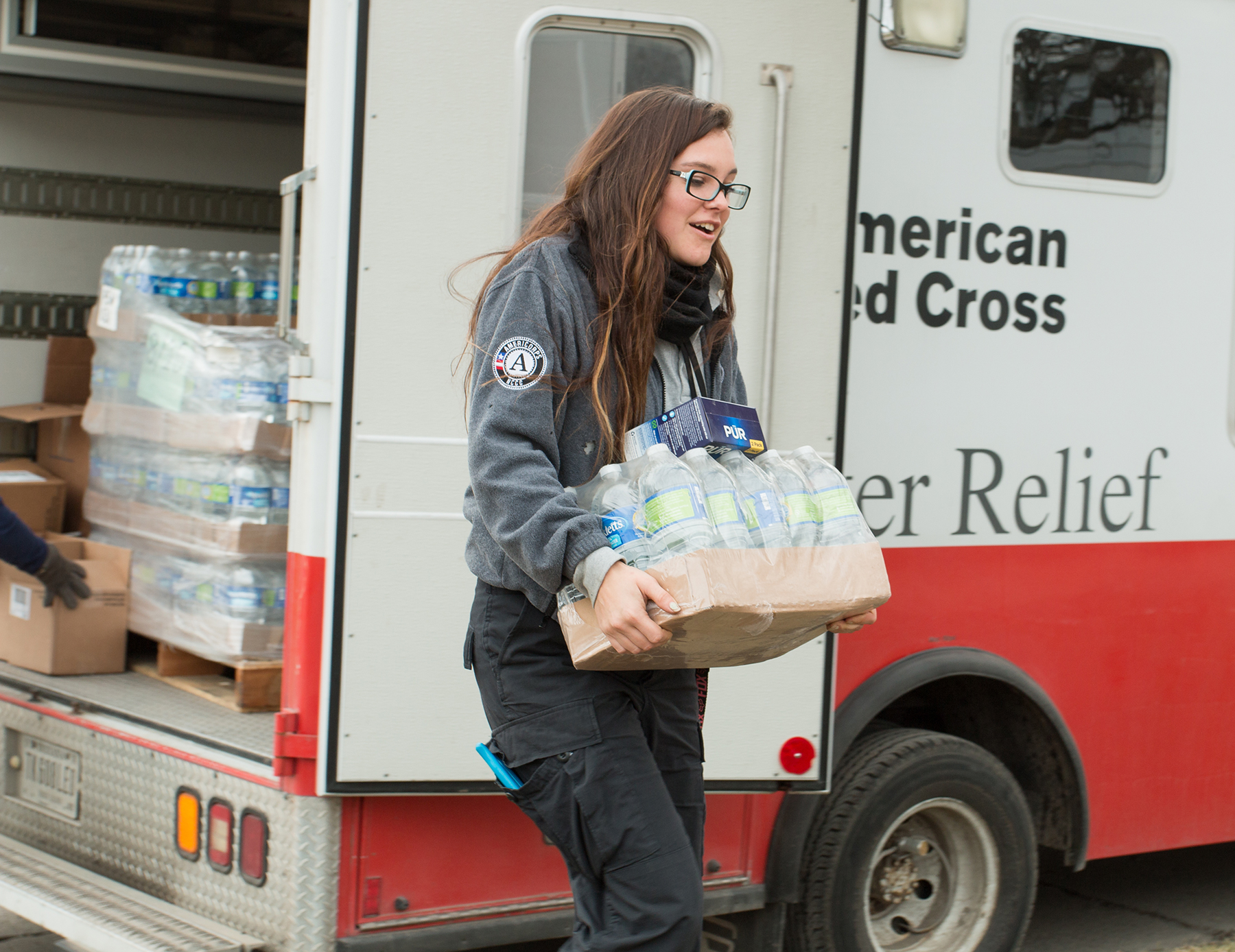
Photo: Cristina Wright

Photo: Rick Smith
Highlights
When research revealed in September 2015 that Flint’s children had been exposed to lead in tap water, the Mott Foundation acted swiftly, granting $4 million to help reconnect Flint to the Detroit water system.
We subsequently committed to grant up to $100 million over five years to help Flint recover and rise from the water crisis.
We met that commitment in just over four years and went on to exceed it, granting $116.7 million over the five-year period to support recovery efforts.
There was a major focus on supporting Flint’s youngest residents.
- The community school model was expanded to include all 11 schools in the Flint Community Schools district.
- Mott Foundation funding helped renovate and build two early childhood education centers to serve children potentially exposed to lead.
In response to Flint’s water crisis, Mott expanded its freshwater grantmaking portfolio in 2016 to include work on water equity issues in Great Lakes states.
Providing help and hope
The Flint water crisis began in April 2014, after the city — which was under control of a state-appointed emergency manager at the time — switched its source of drinking water to the Flint River but failed to properly treat the water. That error caused lead, a potent neurotoxin, to leach from pipes and into the community’s water supply, causing a public health emergency. Local, state and federal officials initially downplayed the severity of the problem, or in some cases dismissed concerns completely, shattering the community’s trust in government agencies.
When high levels of lead exposure among Flint children were first revealed in September 2015, the Mott Foundation acted quickly to begin the long process of bringing safe drinking water back to our hometown. We immediately pledged $4 million to help reconnect Flint to the Detroit water system. With an additional $6 million from the state of Michigan and $2 million from the city of Flint, the switch back to Detroit water took place on October 16. In addition, we granted $100,000 to provide residents with home water filters.
Our decision to help pay for the switch was a no-brainer. Since our founding, we’ve had a deep and unwavering commitment to our home community. We couldn’t sit on the sidelines while the children of Flint were being harmed. Our role as a catalyst for the return to safer water speaks to one of philanthropy’s most valuable attributes: the ability to respond swiftly when disaster strikes to help people meet their basic needs.”Ridgway White, who had been appointed Mott Foundation president at the beginning of 2015
On May 11, 2016, the Mott Foundation announced we would commit up to $100 million in grants over a five-year period to help the city of Flint recover and rise from its water crisis. Our commitment focused on six priorities:
- Ensuring that all Flint residents have safe drinking water.
- Meeting the health needs of Flint families.
- Supporting educational opportunity.
- Strengthening the nonprofit and public sectors.
- Promoting community engagement.
- Revitalizing Flint’s economy.

While we fulfilled that commitment ahead of schedule in June 2020, we continued to make related grants throughout the five-year period. Along the way, we shared information with the community about those grants, which totaled $116.7 million through May 11, 2021.
Looking ahead
The Flint water crisis also underscored the need for more long-term initiatives and programming. A key focus was support for Flint’s youngest residents.
In June 2016, the Mott Foundation granted $2.9 million to the Crim Fitness Foundation to expand the community school model already in place at five elementary schools to all 11 schools in the Flint Community Schools district.
The former Cummings Elementary School in Flint was transformed into Cummings Great Expectations: An Early Childhood Center. The school opened in the fall of 2016, welcoming more than 200 Flint infants and children who potentially were exposed to lead as a result of the city’s water crisis.

In January 2017, construction began on Educare Flint, a new early childhood education center on the campus of Flint’s Durant-Tuuri-Mott Community School. Thanks, in part, to $11 million in grants from the Mott Foundation, Educare opened its doors to Flint students on Dec. 4, 2017.
In 2021, the Mott Foundation granted $5.5 million to support construction of Genesee Health System’s Center for Children’s Integrated Services, a 60,000-square-foot facility in Flint built to bring all its children and family services to one location. The goal was to make it easier for families to get the care they needed, especially as they were navigating long-term challenges related to the water crisis.
We also heard from the community that rebuilding trust was crucial — and that it would take time. In response, the Mott Foundation helped support the construction of a water testing lab in Flint and its first year of operation and testing. The McKenzie Patrice Croom Flint Community Lab, located within the Flint Development Center, opened on Oct. 9, 2020, testing Flint residents’ tap water for a variety of toxins, including lead and copper.

Rethinking our support for the Great Lakes
Based on what we learned from the water crisis, Mott expanded its freshwater grantmaking portfolio in 2016 to include work on water equity issues in Great Lakes states.
The Flint water crisis focused attention on the nation’s aging infrastructure and the devastating health effects of consuming water contaminated by lead and harmful bacteria. It also revealed that nongovernmental organizations had largely overlooked the types of water infrastructure issues that led to a drinking water emergency in Flint. That gap in water infrastructure expertise and assistance programs prompted the Mott Foundation to launch a new area of grantmaking through our Environment program.

In 2017, the Mott Foundation announced that we would provide a total of $4 million to about 15 grantees to address the types of water infrastructure issues that existed in Flint.
Mott grantees subsequently helped to inform the nation’s strongest protections against lead in drinking water, which required all cities in Michigan to replace lead service lines. They also worked on other issues related to drinking water safety and affordability in the Great Lakes region.
The Flint water crisis opened our eyes to additional aspects of the freshwater challenge facing the U.S. We learned that we need to think about issues of water quality and affordability in a more comprehensive way. That’s why the Mott Foundation is supporting a ‘one water’ approach, which starts with the protection of the Great Lakes and other water sources and extends all the way through the water flowing from the taps in our nation’s homes, schools and businesses.”Ridgway White, Mott Foundation president and CEO, writing in 2020 for a piece titled “Looking back and moving forward.”
Though we fulfilled the financial pledge to help Flint recover and rise from its water crisis, we continue to make grants to address the impacts of the crisis, even while addressing other evolving needs in the Flint community.
Mott will continue to demonstrate our commitment to our hometown through efforts to help the community and its residents solve problems, create opportunities and build a vibrant future.