
Restoring Muskegon Lake: A model for recovery
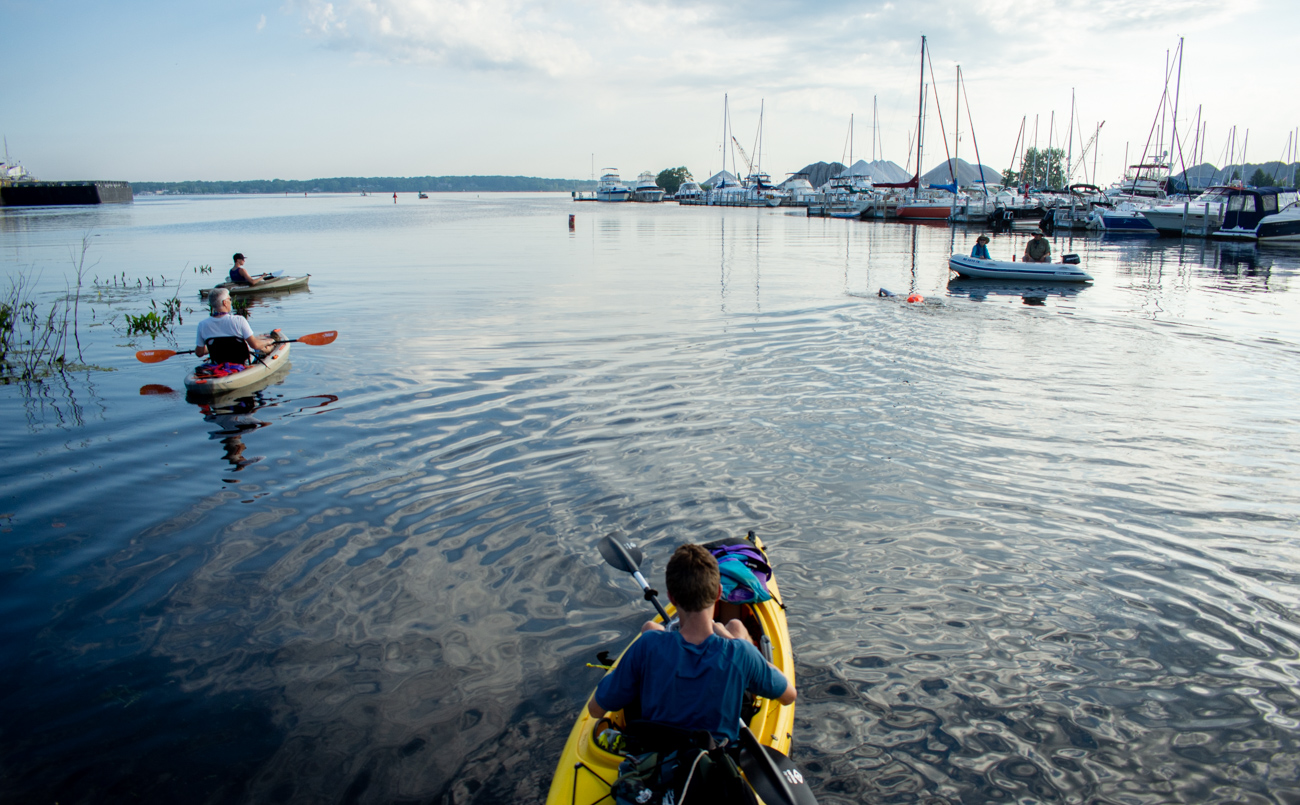
Story, photos and video by Jenifer Veloso.
A lake remembered and reclaimed
Kathy Evans grew up on the north side of Muskegon Lake, a place where middle-class families could earn a living wage working at one of the many industrial sites that once lined the shoreline.
“We would drive around the causeway, look off to the right where the lake was, and you’d see smoke, haze coming from buildings and smokestacks,” said Evans. “You couldn’t go to that side of the lake unless you worked there. You wouldn’t want to go there for recreation.”

Evans’ grandparents’ home, built in the 1920s along Bear Lake’s channel, offered something Muskegon Lake could not at the time — access to clean and safe water.
“We could go down to the water, we could fish, we could put in a little rowboat when we were kids,” said Evans. “And my grandparents would say, ‘Go to Bear Lake, but don’t go to Muskegon Lake.’”
Those early childhood memories shaped Evans’ lifelong connection to the outdoors. As an adult raising two children, she began volunteering with a local environmental organization and attending city hall meetings, during which Muskegon Lake was discussed as an Area of Concern. This is the dubious designation the Environmental Protection Agency applies to toxic hotspots under the Great Lakes Water Quality Agreement, which identifies the most environmentally polluted and degraded waterways in the region.
“Little by little, I found out that there was no coordinated effort to get the work done,” said Evans. “Muskegon Lake was slipping through the cracks. Many people didn’t think we would ever be able to clean it up. And no one thought the lake could be dredged safely without releasing more toxic pollution from the bottom.”

Evans couldn’t accept a future without hope for her community and the lake.
She began working with the EPA, the state of Michigan and the International Joint Commission to help change perception and build trust in emerging cleanup technologies. Together, they organized a public forum at Muskegon Community College to show residents that restoring the lake — including safely removing toxic, contaminated sediment — was possible.
That work helped lay the foundation for a remediation action plan developed in 1987 by the EPA and the Muskegon Watershed Partnership.
Nearly four decades later, Muskegon Lake has been removed from the Great Lakes AOC list, the result of sustained federal, regional and local collaboration.
Together, these partnerships have restored approximately 134 acres of habitat around the Muskegon Lake watershed, removed 110,000 tons of sawmill debris, and returned nearly 100 acres of open water and wetlands to a lake once considered beyond repair.
“The success of Muskegon Lake comes down to collaboration,” said Evans. “Nobody could’ve done this alone.”
Measuring Harm and Recovery
The Muskegon Lake and its watershed were once central to the Odawa people, who relied on the water for fishing, hunting and trade. That relationship changed dramatically during the lumber boom of the 1800s.
As the city of Muskegon grew into one of the world’s leading lumber capitals, dozens of sawmills lined the lake’s shoreline. By 1900, white pine forests were stripped away, wetlands were filled in, and fish habitats were buried beneath layers of sawdust and industrial debris.
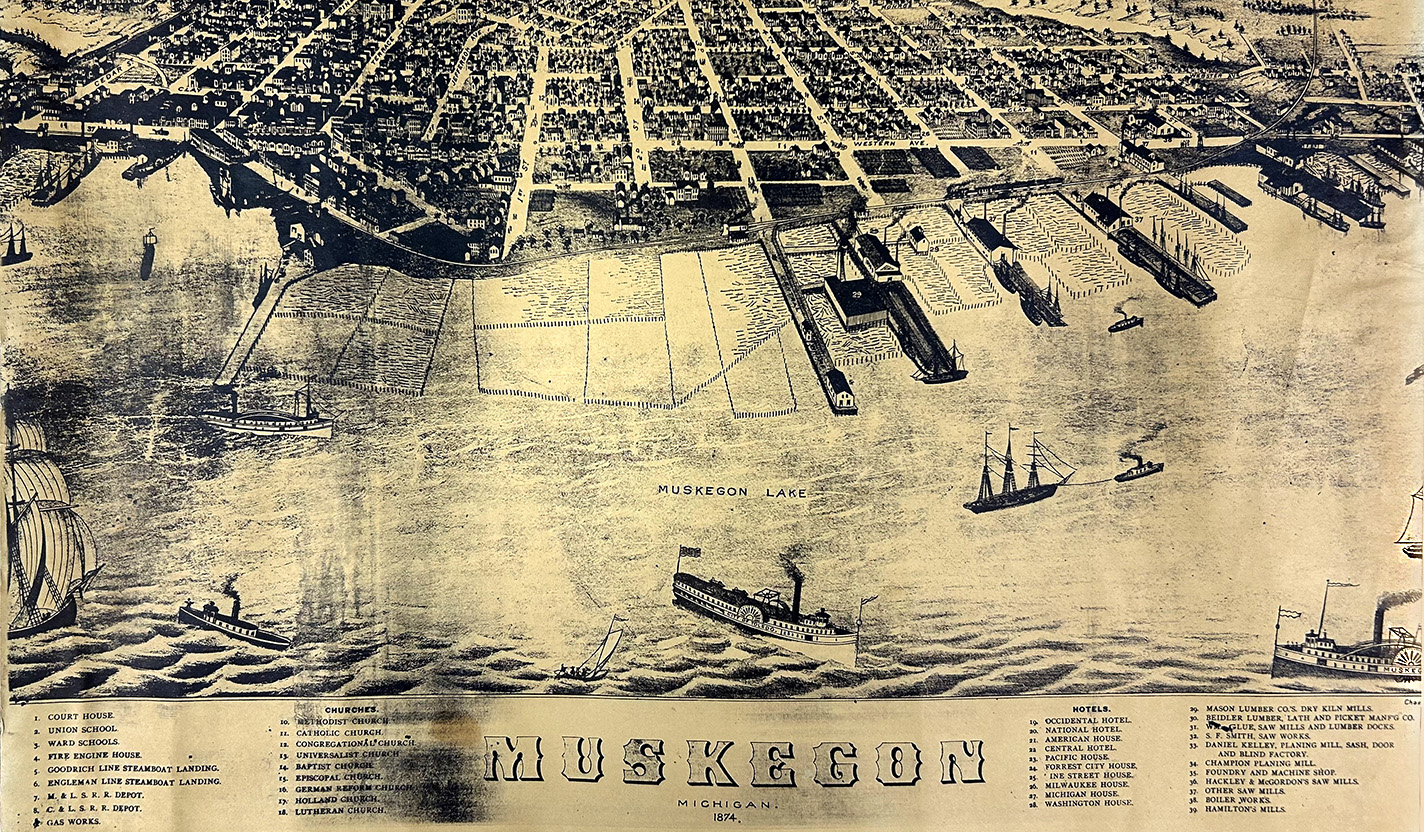
A map of Muskegon, Michigan, as it looked in 1874.
Photo: Courtesy of Muskegon Lakeshore Museum Center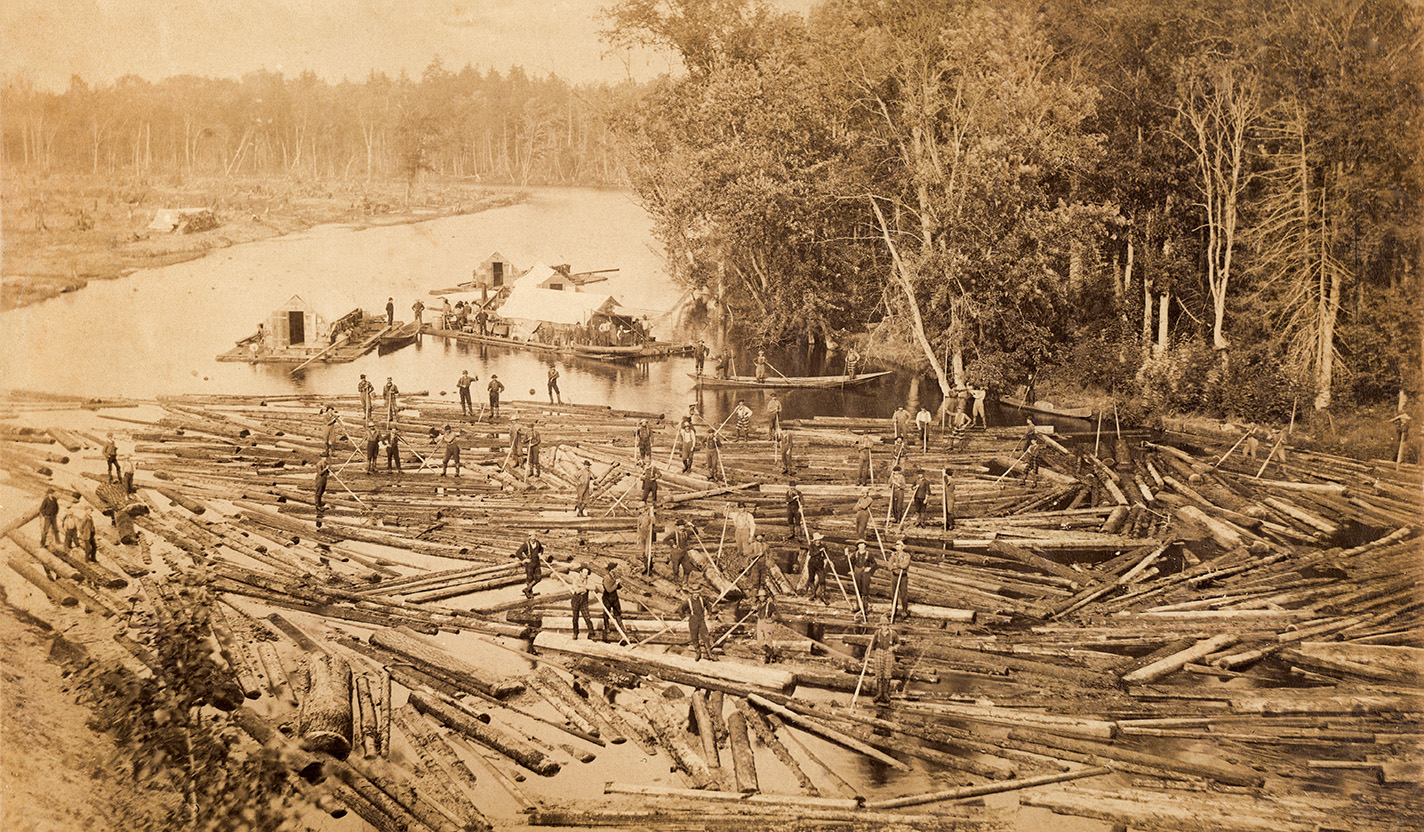
Historical photo of a log drive on a river in Muskegon sometime in the 1800s.
Photo: Courtesy of Muskegon Lakeshore Museum Center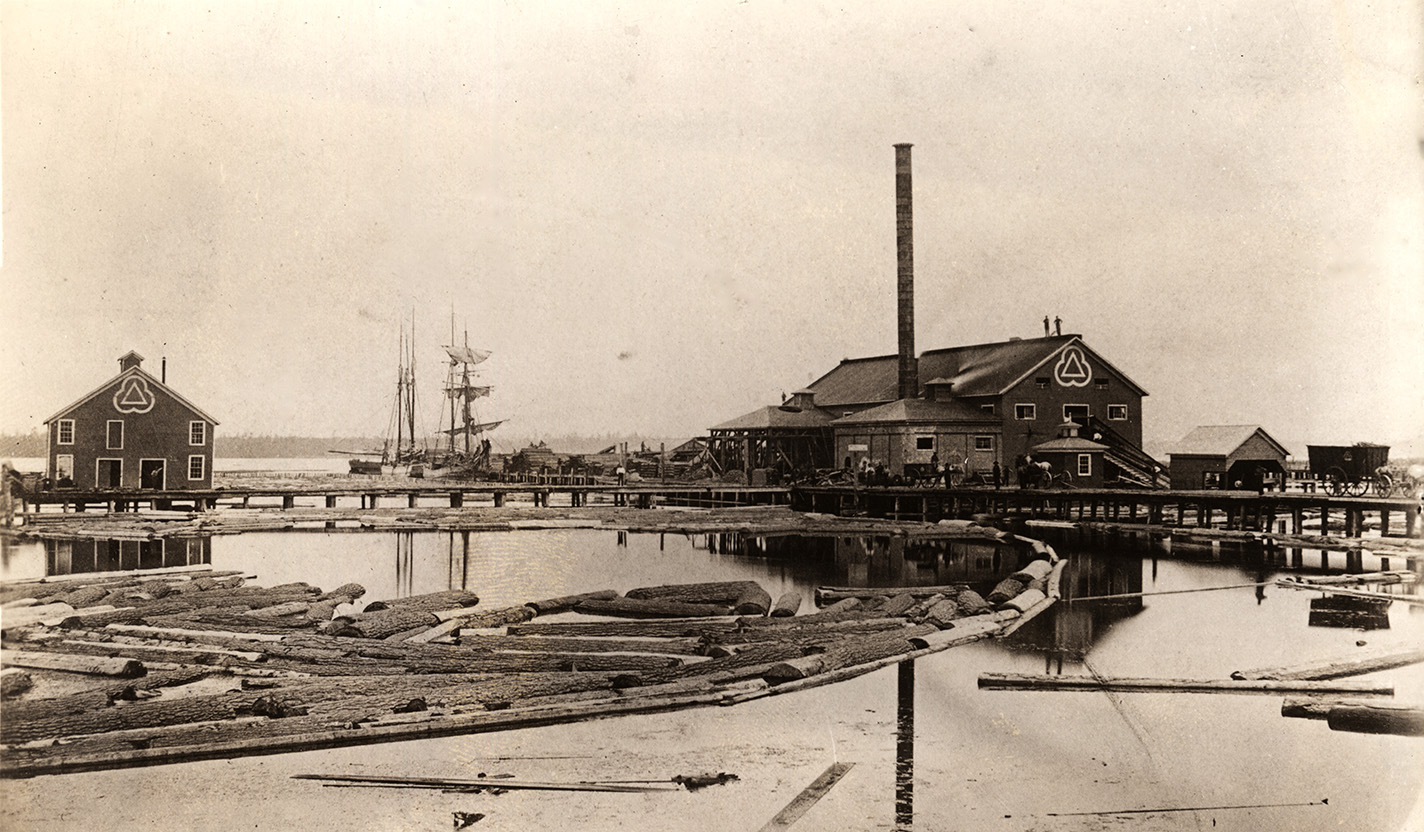
L.G. Mason sawmill, at the foot of Fourth Street on Muskegon Lake, Muskegon, Michigan, circa 1865-1878.
Photo: Courtesy of Muskegon Lakeshore Museum Center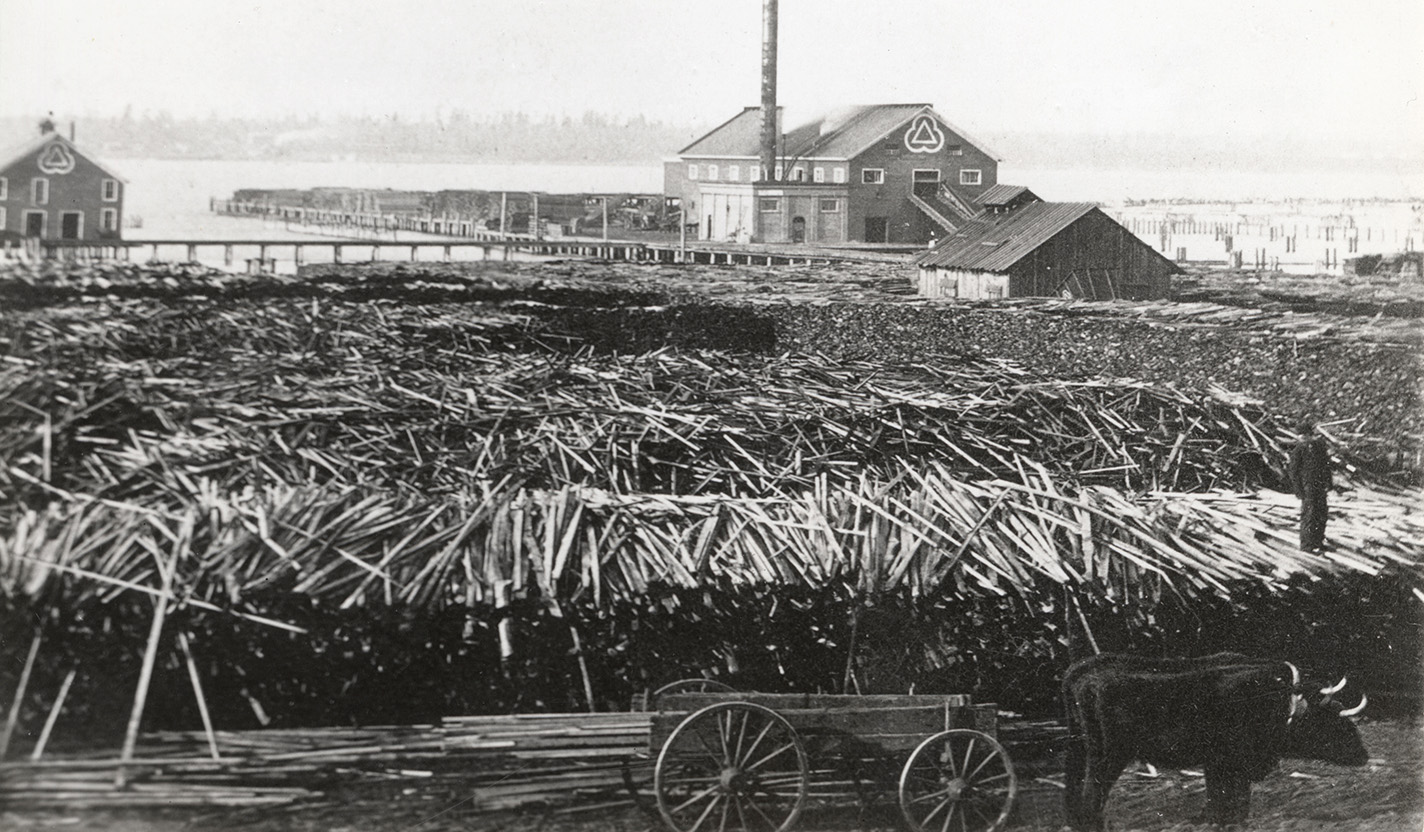
Looking north at the L.G. Mason Lumber Company sawmill in Muskegon, Michigan, 1868. An oxen-drawn cart, slabs and pilings are in the foreground. An unidentified man is standing on the slabs. Muskegon Lake and North Muskegon are in the distance. At far right are pilings in the lake. Produced by the W.J. Brinen Lumber Company, July 1, 1940.
Photo: Courtesy of Muskegon Lakeshore Museum Center1/4
In 1987, the EPA declared Muskegon Lake an AOC. It was one of 43 AOCs identified across the Great Lakes, including 26 in the U.S., 12 in Canada and five shared by the two countries.
To guide cleanup and recovery, the Great Lakes Water Quality Agreement established a standardized list of 14 Beneficial Use Impairments. They describe the most serious ways pollution disrupts a lake’s ability to function — from contaminating fish and wildlife to restricting recreational use.
The impairments capture the measurable, specific environmental problems that must be resolved before a polluted site can be delisted. They also define the benchmarks for determining when an ecosystem has recovered.
When Muskegon Lake was first designated as an AOC, nine impairments were identified. Each needed to be addressed before the lake could be considered restored.
A united front forms within the Great Lakes Region
Even with Muskegon Lake listed as a toxic site, there was little political momentum and no dedicated funding to address the lake’s nine impairments.
The challenge was not unique to Muskegon. Across the Great Lakes basin, polluted waterways languished on the list of toxic pollution sites without a coordinated plan or clear path to federal investment.
In the early 2000s, a coalition of Great Lakes philanthropists, scientists, nonprofits and regional advocates began questioning why there was so little progress around restoration. At the time, Laura Rubin, who was then serving as executive director of the Huron River Watershed Council, began working closely with researchers assessing ecological conditions across the basin.

Their findings were sobering: The Great Lakes were approaching a tipping point.
Regional partners spent the next several years developing a unified restoration roadmap – the Great Lakes Regional Collaboration Strategy – the first comprehensive, basin-wide plan to prioritize cleanup of the region’s most degraded waters.
“When regional partners asked legislators why the Great Lakes weren’t receiving federal funding, the answer was that there was no united voice and no clear need,” Rubin said. “That changed when we came together around a shared strategy.”
Sustained philanthropic investment, including support from the Mott Foundation, helped build the coalition infrastructure needed to advance the strategy. Federal and state agencies, Great Lakes tribes and First Nations, academic experts and local stakeholders joined the effort, aligning science, policy and community priorities.
In 2010, the strategy informed the blueprint for the Great Lakes Restoration Initiative, a bipartisan federal program dedicated to coordinated restoration efforts and funding across the basin.
For the first time, toxic sites around the Great Lakes received dedicated federal funding. The GLRI launched with $475 million in its first year and the EPA leading a multiagency cleanup strategy.
By 2019, Rubin had become director of the Healing Our Waters Coalition, which is staffed by the National Wildlife Federation, a Mott grantee. In this role, she has helped to mobilize a network of more than 200 organizations to advocate for sustained federal funding of $300 million per year for the GLRI.
Through this federal investment, Muskegon Lake received $80 million for 20 successful restoration projects over 15 years — funding that enabled large-scale sediment removal, habitat restoration and shoreline recovery.
Turning strategy into action
While federal funding was critical, long-term restoration also required consistent leadership at the local level.
“It takes so many different partners and agencies to do these cleanups — local citizens, scientists, business owners and city leaders,” said Rubin. “It shows what’s possible when a community comes together around clean water.”
For decades, Evans served as the bridge between the federal strategy and local action, translating federal goals into projects.
“When I look out and see kids fishing where no one would’ve dared swim decades ago, I feel hope,” said Evans. “That’s what this work is all about — giving people back their lake.”
Evans coordinated remedial action planning, aligned federal, state and local agencies, and oversaw habitat restoration and sediment cleanup efforts. She worked methodically through Muskegon Lake’s nine impairments, ensuring each one met the scientific and regulatory benchmarks required for delisting.
“The cleanups weren’t just about dredging and removing contamination,” said Evans. “We brought back wetlands, built fish habitats and restored shoreline vegetation. You can literally see life returning to the lake.”
The vision of the watershed as a healthy ecosystem would be realized through cleaner water, restored shorelines and the return of people to a lake they had long avoided.
From restoration to stewardship
Muskegon Lake’s delisting as an AOC marks a new era for the region that was decades in the making.
The lake’s recovery is already reshaping the community around it. Approximately 134 acres of habitat and more than 6,000 feet of shoreline have been restored. Nearly 100 acres of open water and emergent wetlands have been restored, reconnecting people and restoring ecosystems to a lake once considered lost.
The impact extends beyond ecology. Restoration efforts are projected to boost the local economy by $28 million annually and increase home values by $8 million, evidence that recovery and economic vitality can work hand in hand.
For Muskegon Mayor Ken Johnson, the restoration of the lake represents both civic pride and responsibility.

“We want to focus our best practice resources to ensure water quality and reduce contaminants,” said Johnson. “Continued work on watershed management is critical. We must remain vigilant. We need to ensure we’re not taking steps that could damage the watershed, whether intentionally or unintentionally.”
For Johnson, stewardship also means protecting public access and ensuring that the benefits of recovery are shared equitably across the community.
As Muskegon Lake enters its next chapter, ongoing partnerships focused on green infrastructure, stormwater management, and long-term watershed planning and maintenance will determine whether recovery endures for generations to come.
A model for what’s possible
Muskegon Lake’s delisting is a powerful example of what full recovery looks like and what decades of commitment can achieve.
Its transformation demonstrates the impact of sustained federal investment and the necessity of long-term collaboration among federal, state, tribal, nonprofit, academic and local leaders. It also offers a roadmap for other communities still working toward delisting and proof that recovery is possible even after decades of degradation.
Evans traces her long-term vigilance to childhood memories of being told which waters were safe and which were not. Seeing children fish and play in Muskegon Lake today, she says, is one of the clearest signs of progress.
“All of our partners, we’ve been doing this work for decades together,” said Evans. “We have to keep watching and make sure that we continue protecting what we’ve restored.”