

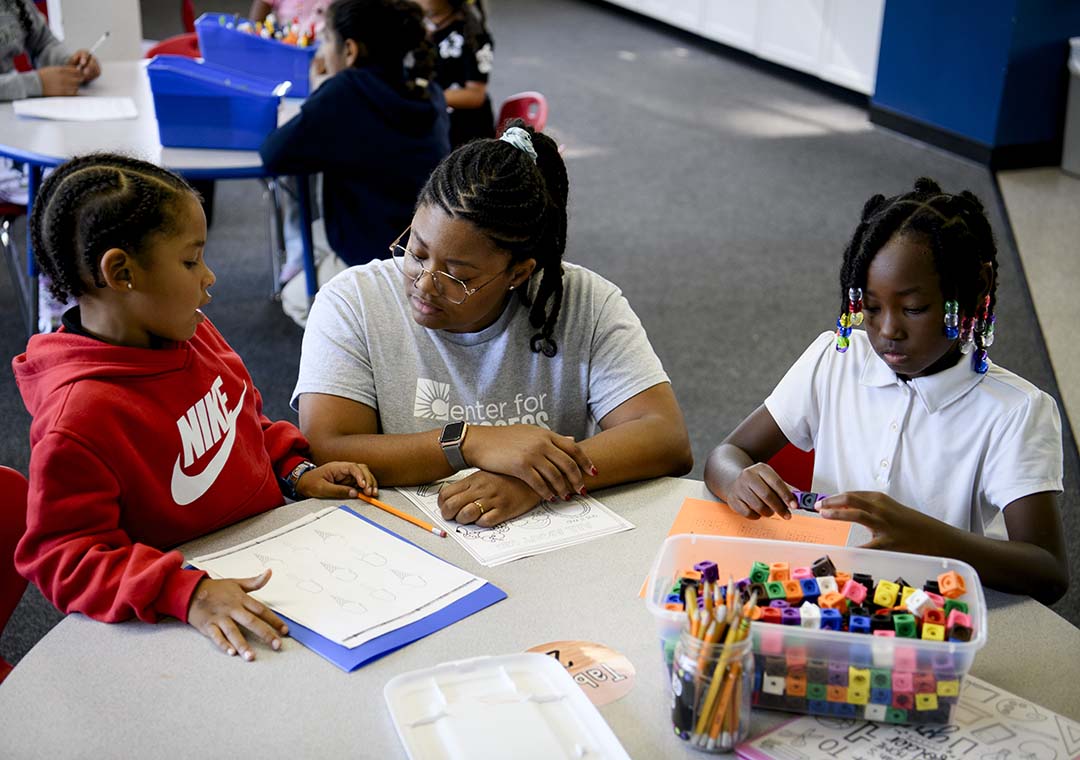
In her fourth year attending Center for Success’ afterschool program in Pontiac, Michigan, fifth grader Sa’Marii* is excited to be back for the fall activities. Hopping off the bus that brings her to the program twice a week, she’s greeted with big smiles and hugs from fellow students, program staff and volunteers.
The afternoon is full: a filling snack, homework help, then one-on-one literacy support with a volunteer mentor.
“I can read at least up to 354 words per minute, so I think Center for Success has helped me quite a lot,” says Sa’Marii. Her favorite series? Junie B. Jones. She loves the main character’s wild imagination. “She’s quite the troublemaker.”
The program is one of hundreds across the state supported by out-of-school-time grants from the Michigan Department of Lifelong Education, Advancement, and Potential. MiLEAP’s funding for OST programs provides thousands of K-12 students with safe places to strengthen fundamental skills, engage in hands-on learning, and connect with supportive adults and peers.
According to the results of the Michigan Student Test of Educational Progress, known as M-STEP, third grade reading levels in the state hit a new low in 2026. In the districts and communities that Center for Success serves, Executive Director Andrea Meyer estimates only about 15% of students are proficient for their grade, meaning, in a typical school year, most students aren’t gaining a full grade level.
Center for Success has been able to turn that around for hundreds of students. On average, their enrollees gain four instructional and four independent reading levels every school year, bringing them up to, if not beyond, grade level.
Their ability to boost academic outcomes is part of the reason afterschool programs enjoy such strong public support. According to the Afterschool Alliance’s America After 3 PM report, 88% of parents in Michigan support public funding for OST. That support is strong across the political spectrum: 92% of Democrats, 87% of Republicans and 90% of Independents favor funding afterschool programs.
Momentum for publicly funded afterschool programs has been building in Michigan in recent years thanks, in part, to the work of the Michigan Afterschool Partnership, one of 50 statewide afterschool networks supported by the Mott Foundation. For two years, MASP’s All in Michigan campaign has helped bring programs together and raise awareness of the impact of afterschool on kids, families and communities.

Center for Success’ library at their site in Pontiac is full of students’ favorite books, organized by reading level for easy access.
Photo: Brittany Greeson | Charles Stewart Mott Foundation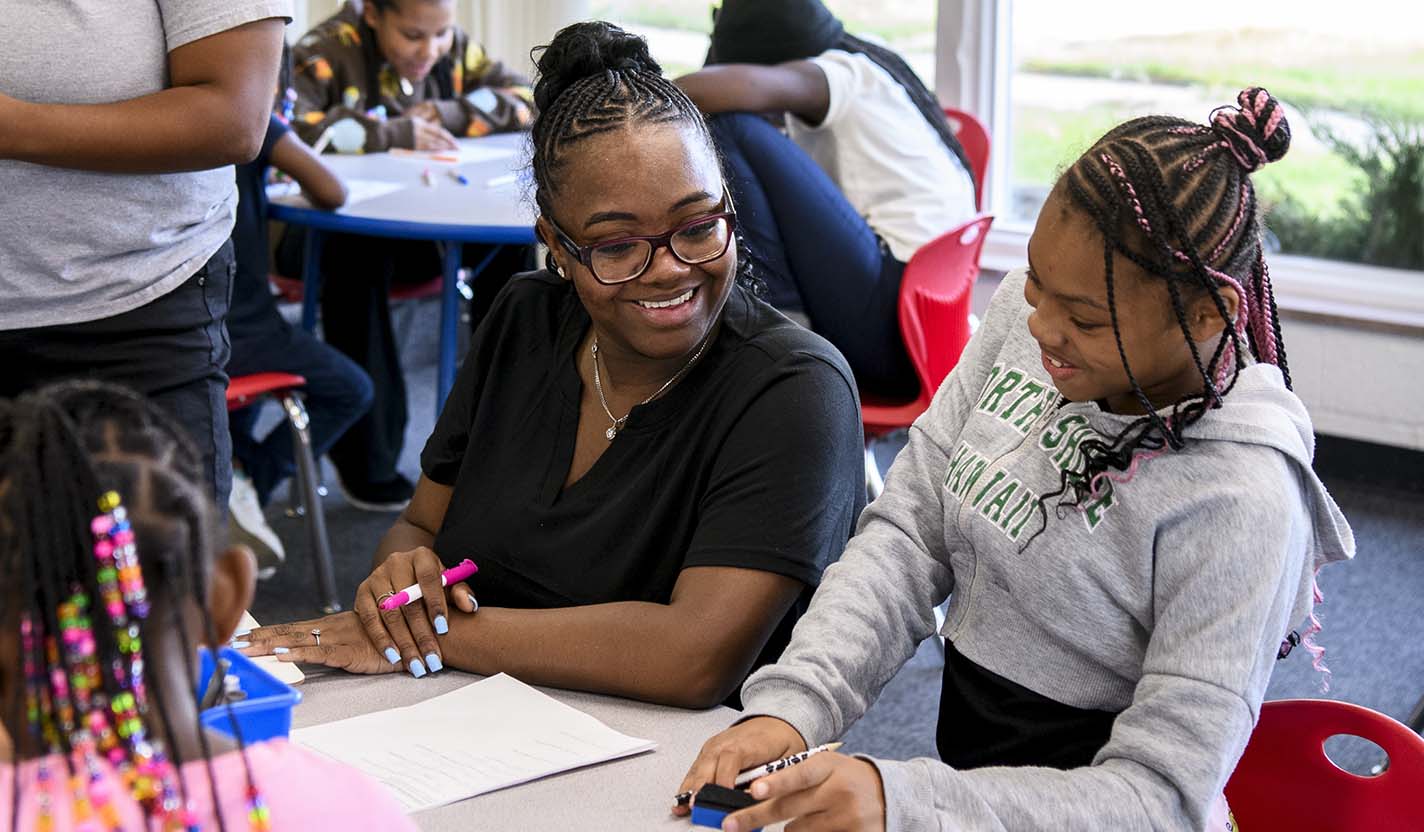
Senior Programs Manager Shanelle Mitchell connects with Sa’Marii and other students, helping with homework and preparing for the afternoon’s literacy-focused activities.
Photo: Brittany Greeson | Charles Stewart Mott Foundation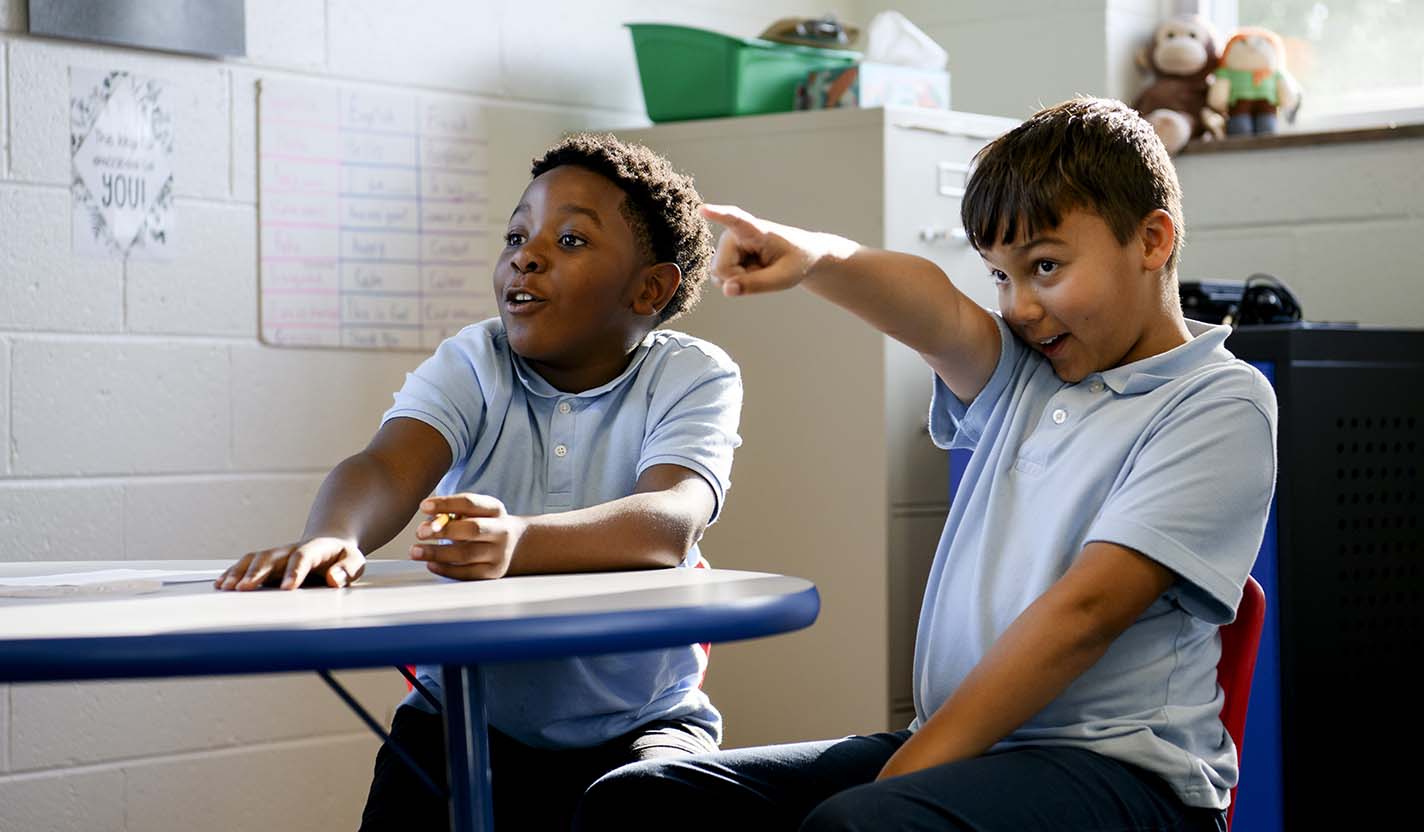
Students excitedly guess the subject of a student’s drawing during a group activity.
Photo: Brittany Greeson | Charles Stewart Mott Foundation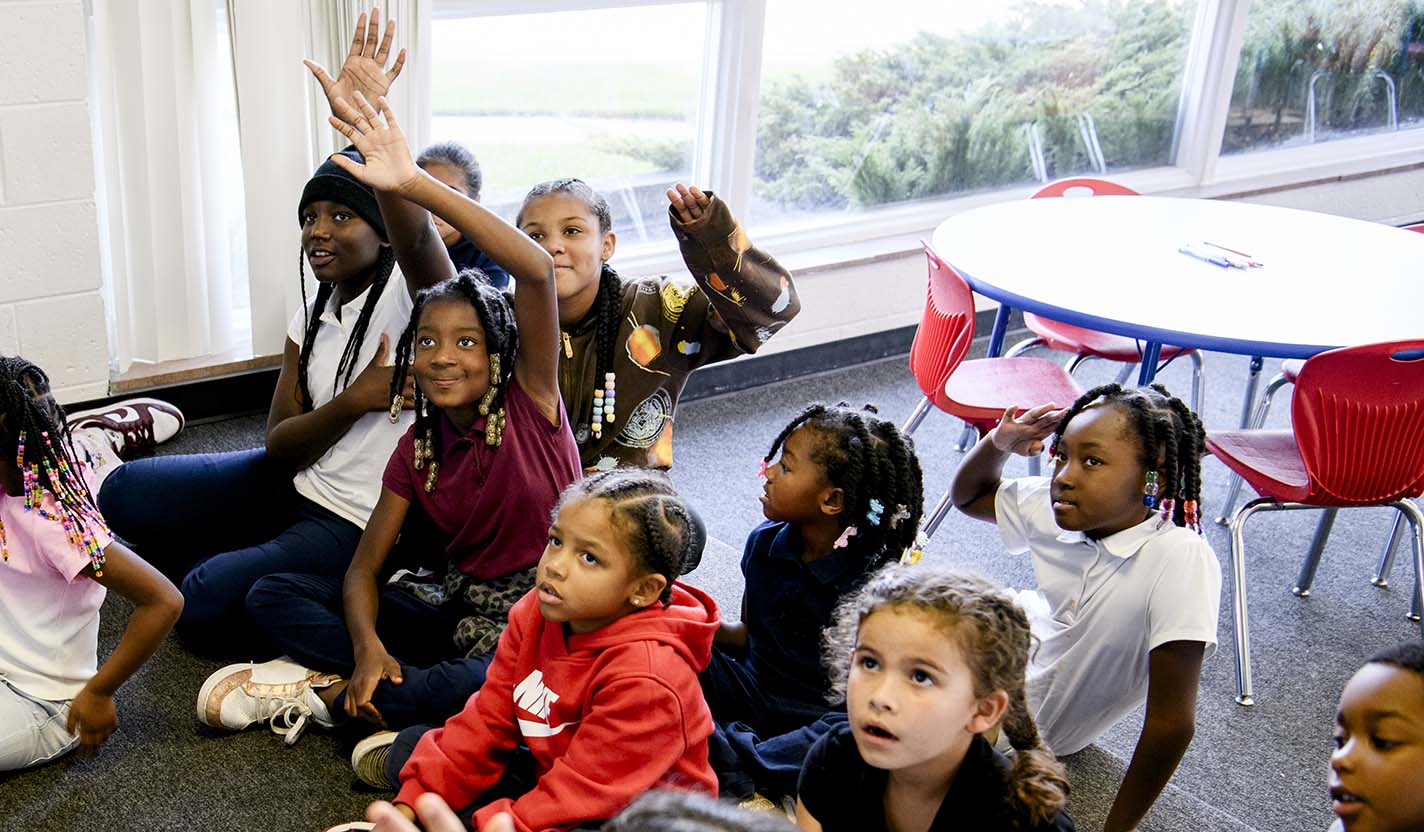
Students eagerly respond to questions asked by a guest.
Photo: Brittany Greeson | Charles Stewart Mott Foundation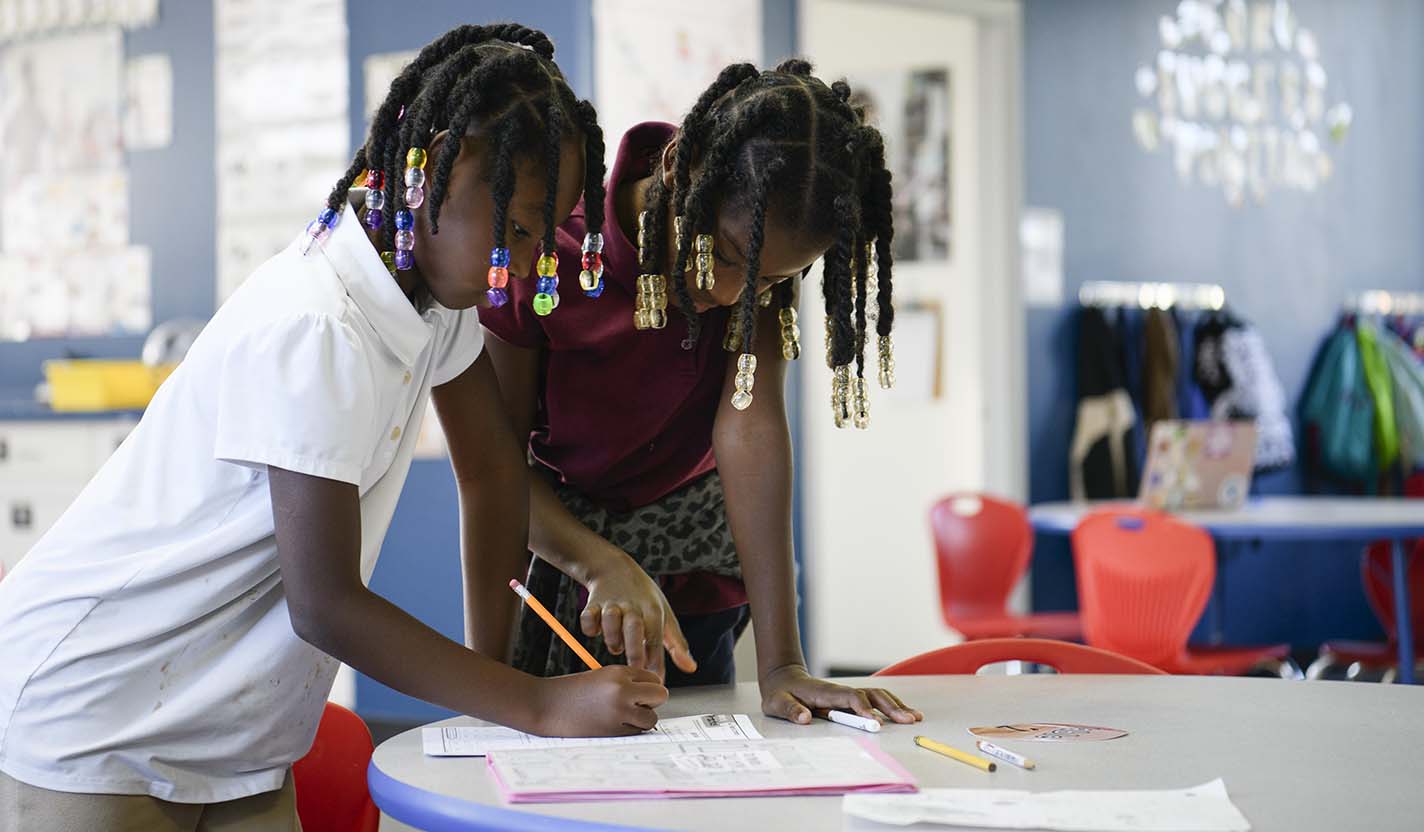
Students collaborate on a practice worksheet as the afternoon comes to an end.
Photo: Brittany Greeson | Charles Stewart Mott Foundation1/5
This year marked a new milestone: The state of Michigan increased its budget for OST from $75 million to $135 million.
“With the expansion of state funding, we have been able to deepen our program, broaden the partnerships, and be more consistent and reliable in our planning,” says Meyer.
As part of MASP’s partner council, Meyer has participated in feedback sessions with MiLEAP and worked with other youth-serving programs to ensure they have access to the grant application. The experience has helped her build relationships with other leaders in the afterschool space, and some have since become Center for Success partner sites.
According to Senior Programs Manager Shanelle Mitchell, the Center’s individualized approach is what makes it so effective.
“I know the boys like football,” Mitchell says. “How can I turn a football game into something that’s got to do with literacy?”
Mitchell also emphasizes the importance of acceptance and belonging. “We always tell our students that we’re doing this together. Nobody’s going to be ostracized or pointed out for what they don’t know.”
Across the state in Kalamazoo, another MiLEAP grant-funded afterschool program is in full swing — quite literally. Run by the Kalamazoo Symphony Orchestra, Kids in Tune is a free afterschool music program for elementary, middle and high school students.
Rehearsals began in October, coinciding with Lights On Afterschool, a national month-long celebration of the many ways afterschool programs promote learning and skills development.
For eighth grade violinist Noveon, playing at Kids in Tune is an important opportunity to connect with peers who share her interests.
“They understand we are connected through music,” she explains. Through the program, Noveon’s met friends who are as excited about the music as she is. “I eventually realized, hey, there were other people like me.”
Kids in Tune has also helped Noveon become more confident. With additional rehearsal time and musical knowledge, she doesn’t hesitate to share what she’s learned to help other students in her music class during the school day.
“There’s a lot of kids who feel like they’re on the outskirts of life,” says Noveon. “Programs like Kids in Tune can really help kids find where they feel like they can belong.”
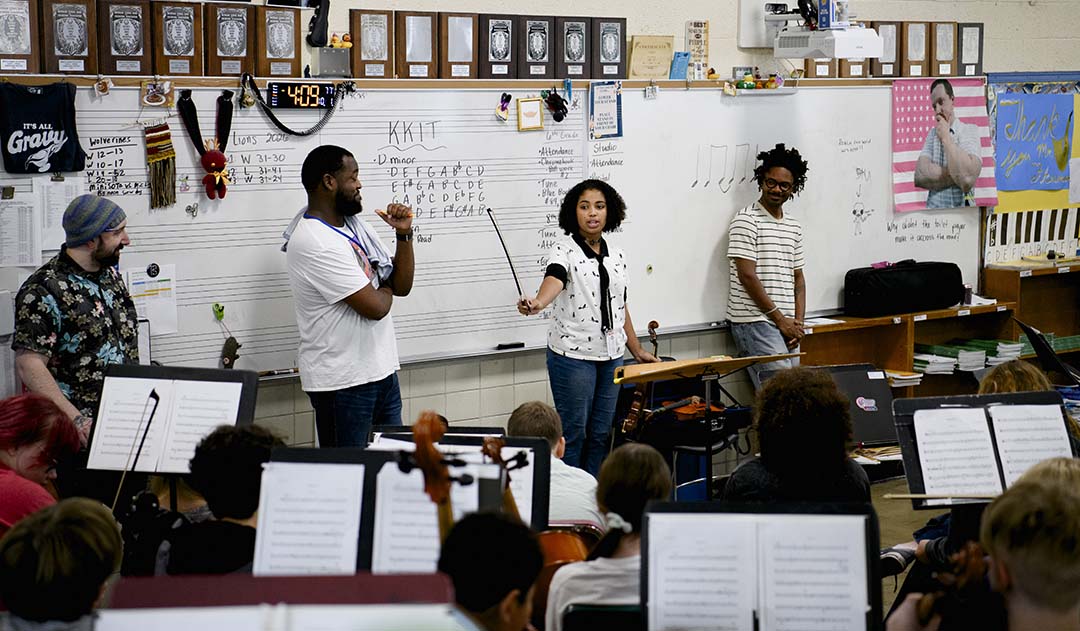
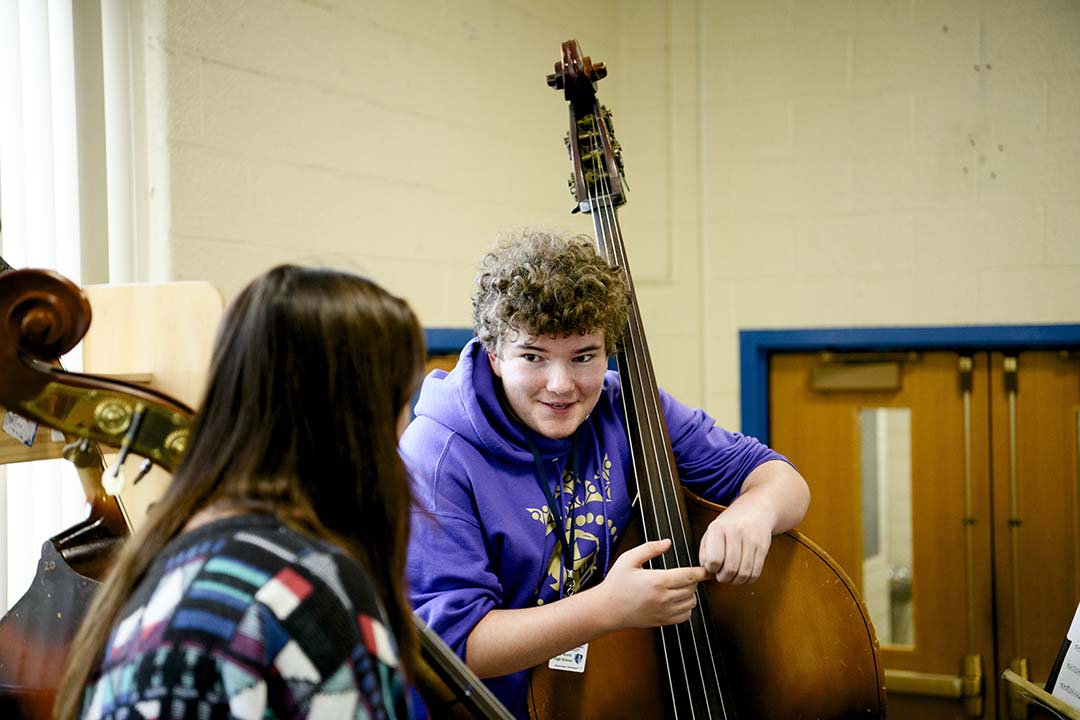
Alex, a high school junior, is a multi-instrumentalist: upright bass, cello, timpani, cymbals and a “little bit of piano.” He relishes any time of day when he can play music but says afterschool is particularly special because there’s no pressure of a grade.
“The grade kind of controls how much you enjoy the class,” he says, explaining that students playing outside of school can be less concerned about making a mistake, which allows for more creativity.
Alex is a section leader in his school’s orchestra, a leadership opportunity he attributes to his experience at Kids in Tune.
“I think that being creative with it has actually helped me get where I am today,” he says.
Other state-funded programs are helping young people navigate the often anxiety-inducing transition to adulthood. For many, graduating from high school is the first time they’ll make decisions about how to prepare for an independent future.
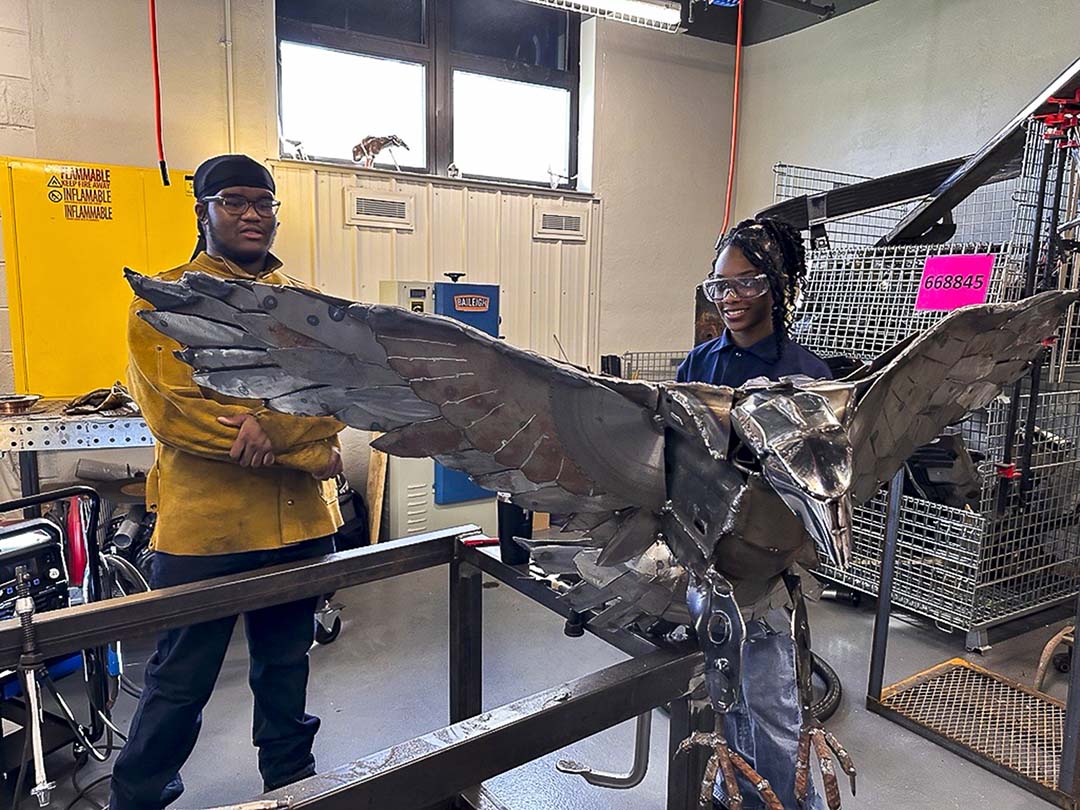
Thurston High School seniors Janiyah and Marcus aren’t worried. The Detroit area teens know they can bring what they’ve learned in their school’s welding shop to a labor market hungry for their skills. The students have a welding class during the school day, then attend Atlantic Impact’s afterschool and summer programs, funded by MiLEAP OST grant funding, where they continue practicing, participate in competitions and learn about welding careers onsite at companies like nearby Roush.
“Welding is always in demand. People always want new welders, new fabricators to do jobs,” says Marcus who plans to finish his welding certificate next year while attending college. “It’s much easier to have a straighter path than just trying to figure it out as you go.”
Thurston is one of Atlantic Impact’s five sites where students can explore postsecondary pathways. The Detroit-based nonprofit focuses on supporting students’ college access and development in skilled trades. Students interested in trades attend afterschool and summer programs that build on career and technical education programs at their high schools.
“There was not this level of support for afterschool at all before 32n dollars came in,” says Anise Hayes, Atlantic Impact’s co-founder and executive director, referring to the state funding, which was first passed in 2021. MiLEAP grant dollars have allowed Atlantic Impact to focus on supplementing schools’ CTE programs. The extra hours students get in the shop make a difference.
“It really takes a long time to master these skills,” says Hayes. “If they’re trying to apply to a union or get a job, they can point to all of the hours that they’ve had cumulatively.”
Center for Success, Kalamazoo Kids in Tune and Atlantic Impact reflect the broad range of afterschool programs young people, families and communities rely on. They help working families balance busy schedules and give parents peace of mind that their children are safe and engaged.
Still, five in six Michigan youth who would participate in an afterschool program can’t access one, according to America After 3PM. Cost, lack of transportation and program availability are the greatest barriers to access.
“Young people are curious, creative and ready to lead, and afterschool and summer programs are where many of them prove it,” says Erin Skene-Pratt, MASP’s executive director. “In a single year, nearly 90,000 students participated in state-funded programs to explore careers, sharpen their reading, try out new skills and learn alongside caring adults. Nearly 680,000 more young people in Michigan want that same chance, and our work ahead is making sure every one of them has a place to grow.”
*To protect their privacy, we’ve chosen to use only first names to identify people under 18.

