

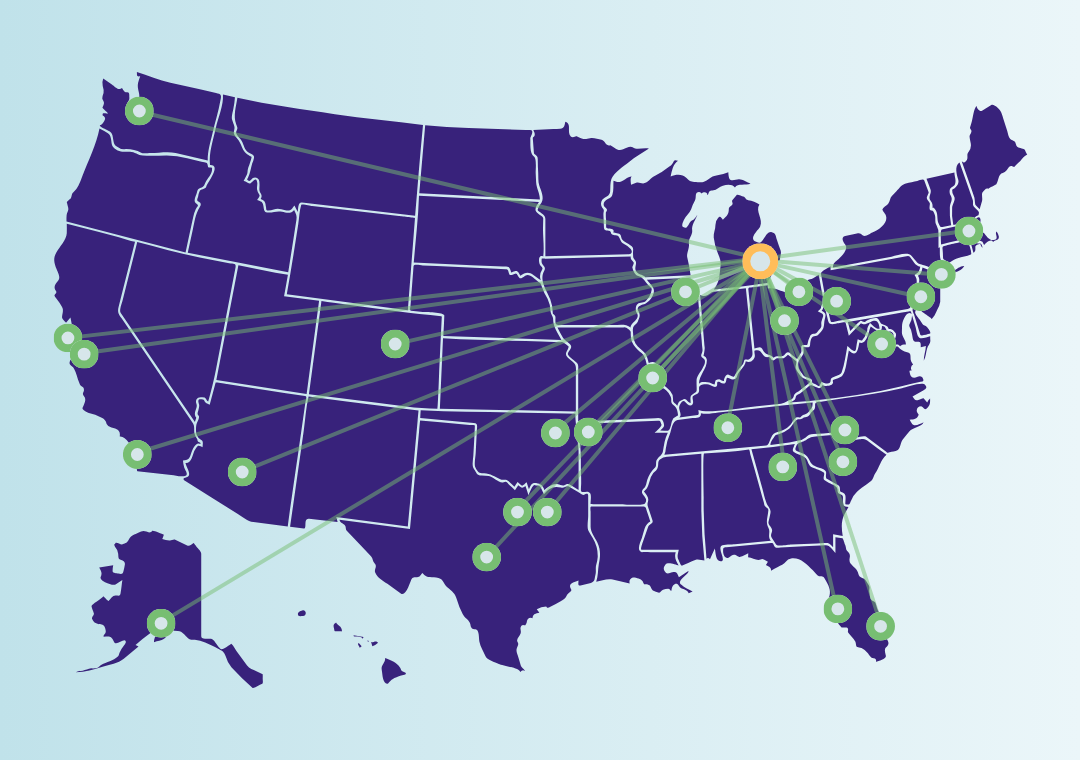
If you could create a business or initiative to solve any problem, what would it be? This was the question the Mott Million Dollar Challenge posed to K-12 students at the outset of the year, inviting them to pitch ideas for businesses and social solutions. Thousands of students across the country answered the call. In June, the kids and teens behind the top 60 ideas will head to Flint for the final stage of the competition.
The Challenge — part of the Mott Foundation’s centennial celebration — inspired more than 5,300 students to submit ideas. In April, 1,500 submissions won in Round 1, which carries a $250 prize for each.
From those Round 1 winners, 60 submissions were selected as semifinalists. Their creators will take home an additional $5,000 and pitch their ideas to a live audience and panel of judges for a chance to win up to $25,000.
The Mott Million Dollar Challenge is funded by the Mott Foundation and administered by the Network for Teaching Entrepreneurship in collaboration with VentureLab, Young Entrepreneur Institute, the Afterschool Alliance and Collaborative Communications.
In the first phase of the competition, students pitched their business or social solution in 30- to 90-second videos. Their products, services and strategies addressed opportunities in areas such as technology, environmental protection, consumer goods, education, housing and more.
A key organizer behind the scenes, Suzanne Taylor, director of events at NFTE, watched hours of pitch videos as she supported students and educators through the submission process.
“The passion is the thing that comes through to me the most,” Taylor said.
Many of the ideas students submitted show an impressive level of technical sophistication, including designs for medical devices, renewable energy solutions and applications for artificial intelligence. Others are simpler solutions, yet “smart, sensible and passionate,” Taylor added.
While the first-round winning submissions came from students in all 50 states and Washington, D.C., Ohio, California, Florida and Michigan had the most winners.
Semifinalists will compete in six groups, representing both business and social categories across three grade levels: K-4, 5-8 and 9-12.
This outpouring of fresh ideas nationwide demonstrates that entrepreneurship education is about much more than starting a business. It’s about helping young people to see themselves as thinkers, creators and innovators.
Many participants prepared their video pitches with the help of afterschool programs. This was especially true in Florida, where hundreds of students submitted their ideas during the first months of the year. Four students from the state will compete in the high school division at the final event.
“Florida prides itself on being small-business friendly and encourages youth to consider entrepreneurship,” says Lili Murphy, executive director of Florida Afterschool, Inc. “We believe afterschool is the best setting for children to explore and engage in project-based learning, so the Challenge presented a tremendous opportunity for the programs we serve.”
The Mott Million Dollar Challenge celebrates the Foundation’s long-standing commitment to preparing young people to be leaders in their schools and communities and builds on a decade of work with youth entrepreneurship organizations, including NFTE, VentureLab and YEI.
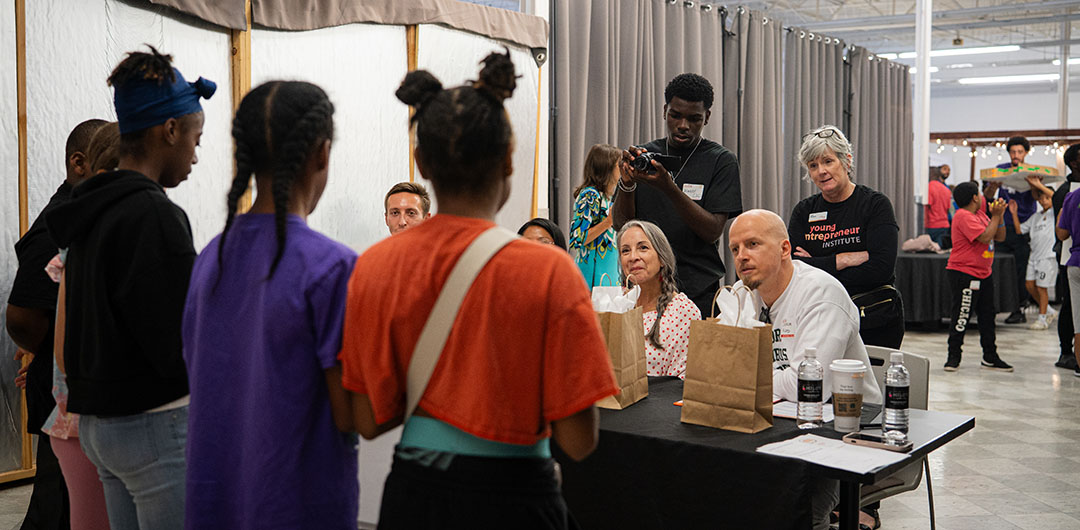
As Mott Foundation grantees, these organizations have partnered with schools, districts and the Mott-funded 50 State Afterschool Network to expand access to entrepreneurship experiences for young people. Their programming has reached hundreds of thousands of students with opportunities to develop ideas, build skills and see themselves as leaders.
Since launching the Challenge, NFTE, VentureLab, YEI, the Afterschool Alliance and Collaborative Communications have connected with thousands of educators to help their students brainstorm, record and submit ideas. Working to ensure as many students as possible could participate, they hosted workshops and calls, engaged partners nationwide, and compiled resources for educators and students new to entrepreneurship.
Scott Mann, VentureLab’s director of education and training, played a key role in outreach to engage classrooms and youth programs in the competition. A licensed teacher and former youth summer program leader himself, Mann understands the lengths to which educators will go to support their students, including gaining new skills and mindsets.
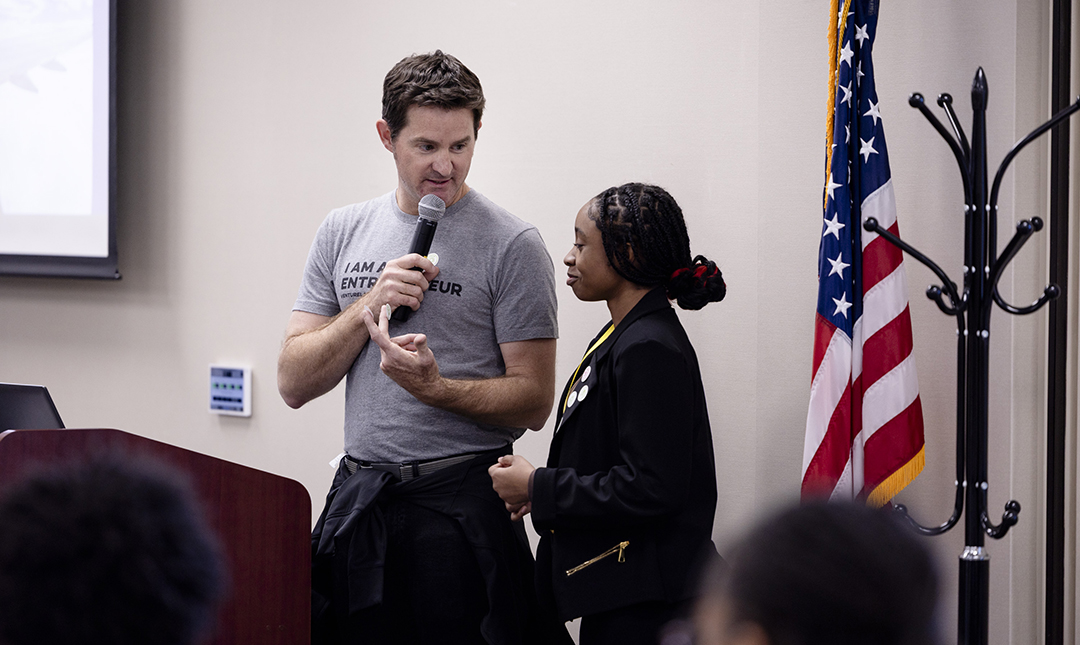
“[Educators] have to be entrepreneurial in their own thinking and embrace that same type of iterative growth in themselves,” he says. “When they can really embrace that and practice what they teach in that learning environment, youth will flourish and grow.”
In the next phase of the Challenge, the semifinalists are preparing to make the case for their ideas at the final event in Flint. Educators and coaches from partner organizations will help these students polish pitch decks, refine their ideas and anticipate questions from judges.
“We’re really looking forward to supporting these students as they get ready for the live competition,” said Ilene Frankel, YEI’s Executive Director. “Moving from a short video pitch to presenting in person is a big step, and our focus is on helping students feel prepared and confident to present their ideas in a way that feels authentic to them.”
The semifinalists will journey to Flint in June, ready to take the stage and put their creativity on display. Stay tuned to hear more about their experiences, the skills they sharpen and the passion behind every pitch.
Learn more about the history of the Foundation’s work in youth entrepreneurship.

