
Young entrepreneurs create, connect and grow through the Mott Million Dollar Challenge
The room goes quiet as Nysa Chhajed takes center stage. In just four minutes, this rising sixth grader from Fremont, California, must make the case for her idea to a panel of judges: the problem it solves, why it’s important and how she can make it a reality.
She takes a deep breath. The presentation she’s spent countless hours practicing goes by in a flash. Her idea? Windmills positioned on highway medians that generate clean energy from the airflow created by passing vehicles.
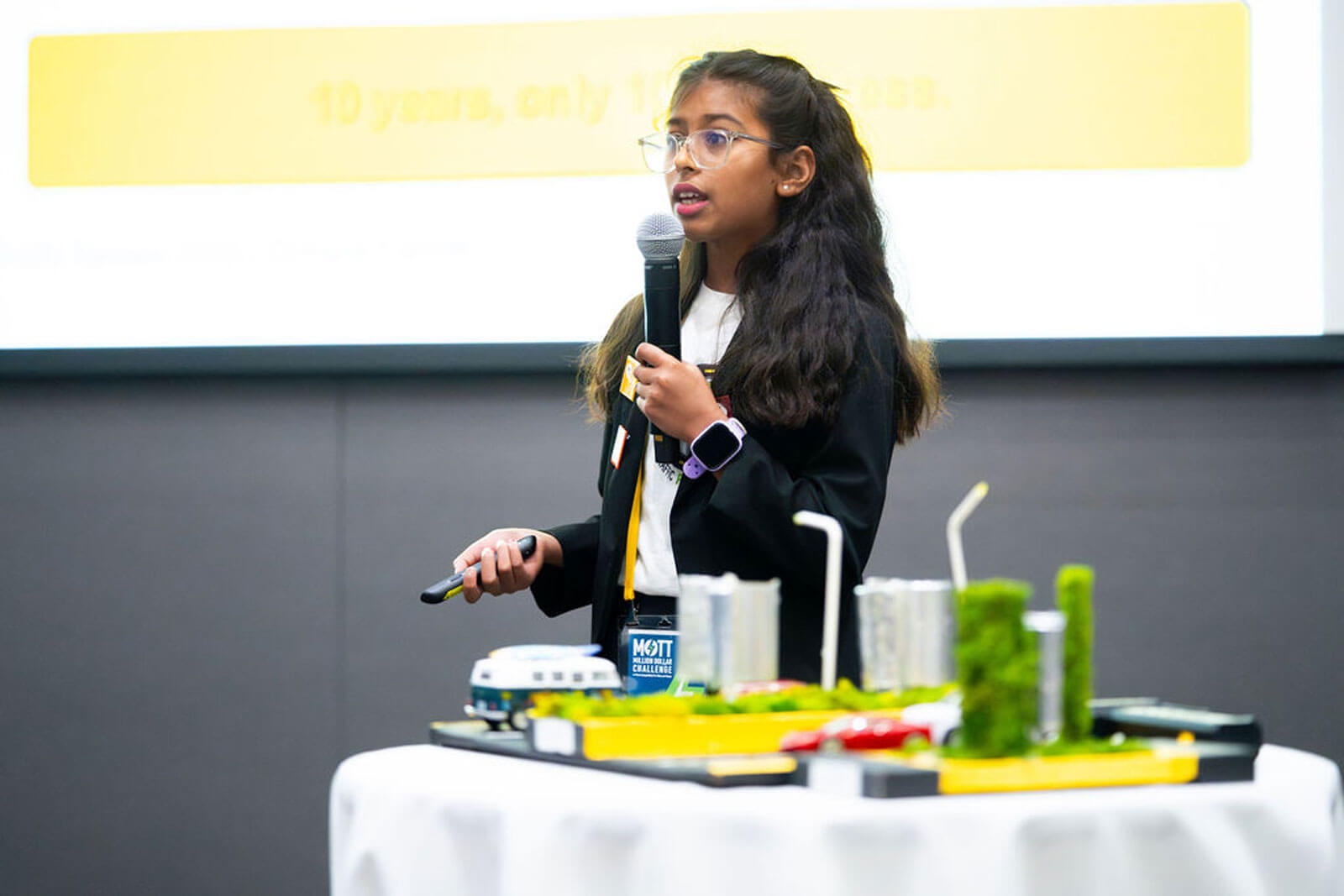
Her presentation is packed with facts on fossil fuel use and renewable energy development. She shows a prototype — the sixth iteration she’s designed since coming up with the idea on a family road trip.
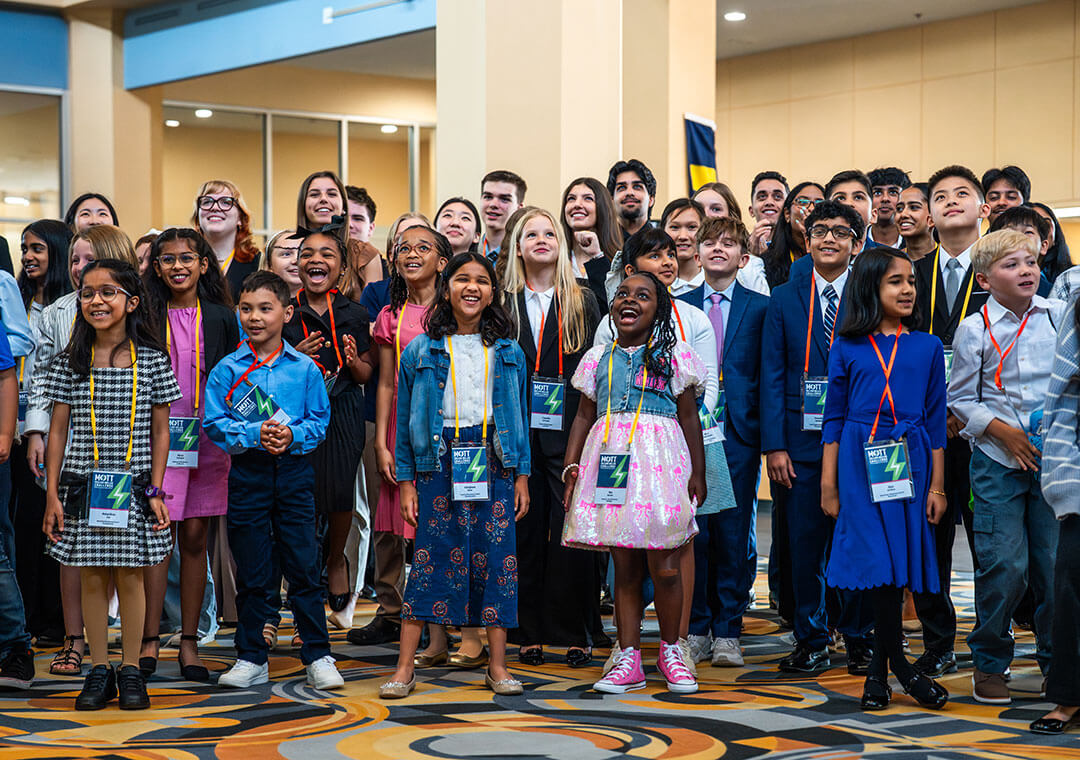
Selected from thousands of video entries, Chhajed’s idea was one of 60 pitched in the final phase of the Mott Million Dollar Challenge in Flint on June 15 and 16.
“I was very nervous,” she said after pitching in both the semifinal and final rounds. “But eventually you’ll get used to it, and you’ll just start speaking like it’s your mom or dad.”
The two-day event culminated in six $25,000 grand prizes, with one awarded in each of two categories across three grade groups. As one of three finalists in the 5-8 grade social solution category, Chhajed earned a total of $15,250 through the Challenge.
An early spark for entrepreneurial thinking
Like Chhajed’s windmill design, fourth grader Lailah Moore’s idea also was inspired by her experience on the road. She noticed that adults like her mom often struggled to communicate with other drivers when they saw safety hazards on other vehicles.
Her solution is CarMunication, an app designed to connect drivers in the same area. Moore submitted her video pitch to the Mott Million Dollar Challenge, and, in April, after the first round of judging, she won $250. A few weeks later, she’d been selected as a semifinalist, which carried an additional prize of $5,000.
“I was so excited,” she said.
She said that excitement continued to build as she traveled from her hometown of Herndon, Virginia, to Flint to pitch in the semifinal round alongside other elementary students from seven different states.
Semifinalists in the K-4 business idea group first shared their ideas in 30- to 90-second videos.
By the afternoon, she’d been named a finalist, which earned her an additional $10,000. After pitching in the final round on Day 2, she was still buzzing.
“I feel accomplished that I made it this far. It was also so scary going on stage,” she said. “The [judges’] questions are so unexpected.”
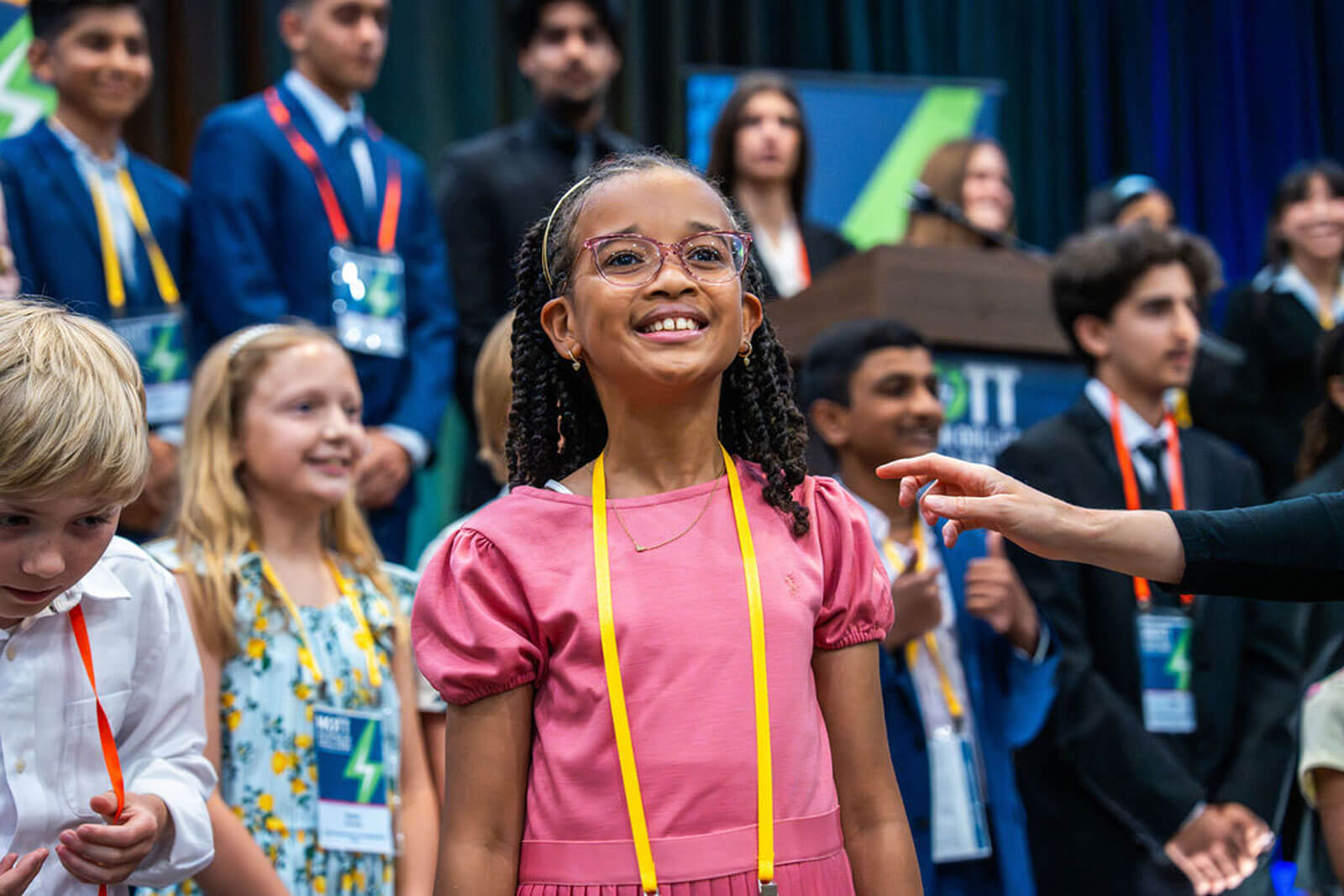
Moore’s experience reflected many of the lessons young people can learn from entrepreneurship. An early introduction to market research and customer validation can teach even the youngest students skills in research and design thinking. Moore’s pitch included findings from a survey she conducted with drivers to understand their needs and interest in her app.
“Because of this competition, I realized that a good idea is not enough by itself,” Moore reflected at the end of her final pitch. “You have to test it with real people, keep improving it and not give up when things get in the way.”
A platform for young people to explore, research and create
For a team of three high school seniors from West Lafayette, Ohio — Sophia Bluck, Autumn Joyce and Bridget Kobel — the journey to the final competition in Flint started with a new curriculum offered at their school: AI for Youth.
“We were sitting in our classroom one day, and our teacher, Mr. McCurdy, came up to us, and he told us about this challenge,” said Kobel. “He was like, ‘You guys just have to find a great idea.’”
Exploring a range of issues with guidance from their teachers, they learned about a troubling national trend: declines in reading proficiency.
“We found that 40% of our fourth graders are on reading improvement plans, and we wanted to just find something to help with that,” Kobel said.
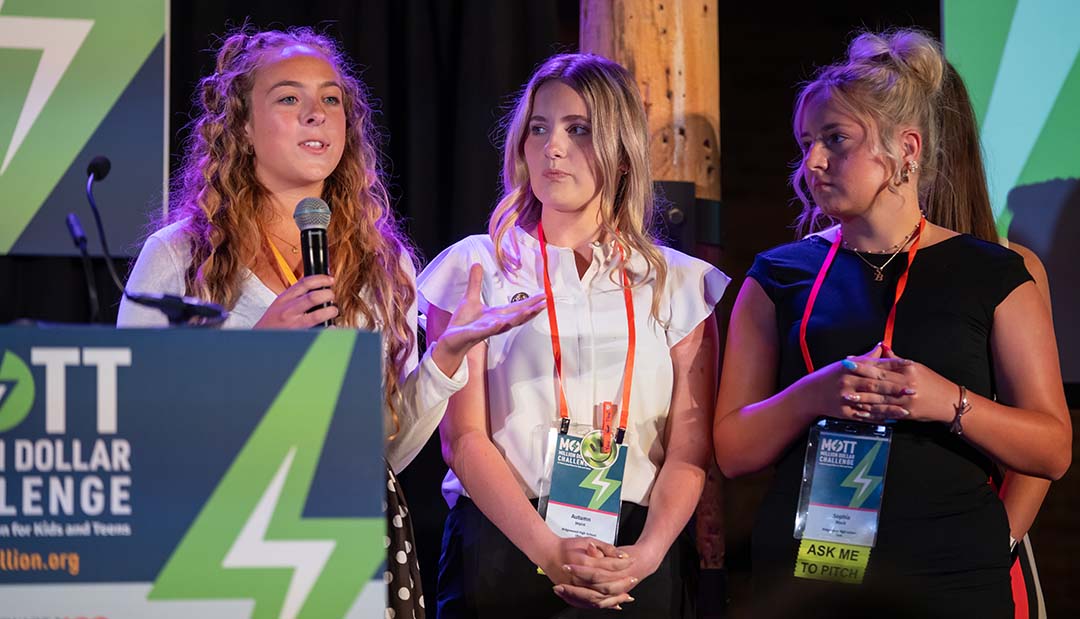
“If you can’t read, how can you read for your math quiz? How can you read for your science quiz?” asked Bluck. “Reading is a foundation for success.”
They began researching, interviewing reading instructors and visiting classrooms. Then they built a solution: Reading Reimagined, an AI-powered application that helps kids develop language skills by writing their own stories.
“I struggle with dyslexia, and I had a very hard time learning how to read,” said Kobel, who explained that teachers helped her using the Barton system, which breaks words down into smaller units called phonemes to help learners distinguish sounds. “We tried to incorporate all of this so that our app is all-inclusive for even children with ADHD and other reading disabilities.”
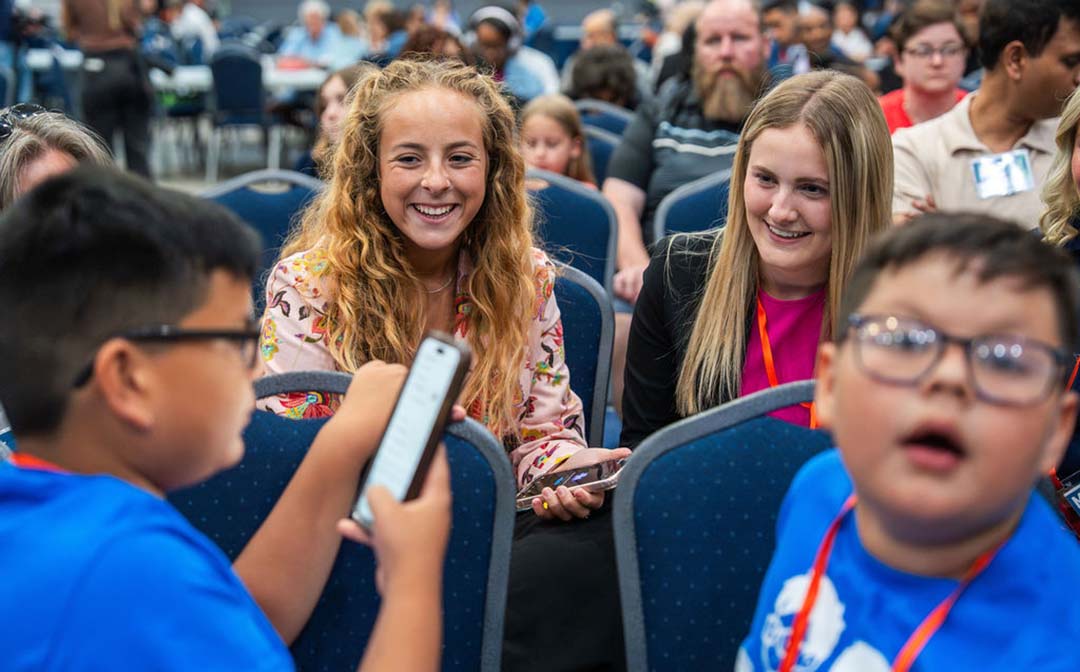
Before reaching the final competition, the team had already introduced the app in classrooms across 20 school districts in Ohio, including their own.
Their hard work paid off — they advanced to the final round in the 9-12 grade social solution category and were awarded a total of $15,250 for their participation in the competition.
Resilience takes root in the entrepreneurial process
Kiren Makam, an eighth grader from Bellevue, Washington, arrived in Flint as a semifinalist with his idea, PureDrain, a portable storm drain filter he designed to protect native ecosystems.
Makam’s original pitch video submitted to the competition earned him a spot among the semifinalists who competed in Flint.
The most important part of his pitch, he said, was differentiating his solution from existing invasive species removal. PureDrain prevents the conditions that allow these species to thrive in the first place.
“I felt that was really important to say that mine is effective, and it’s more long-term,” he explained.
Though Makam didn’t advance to the final round, the experience gave him direct feedback from judges and a clearer sense of how to keep improving his idea. One judge asked how the filter would keep working during a heavy storm, when a large amount of rainfall could potentially overwhelm the PureDrain.
“I need to investigate further with more testing,” Makam said.
That kind of exchange is a key part of entrepreneurship education: giving students a chance to pressure test their ideas, respond to tough questions, and build the grit, determination and resilience to keep going.
A shared stage creates lasting connections
Ayden Jennings, a fourth grader from Dallas, Texas, didn’t advance to the final round of the Mott Million Dollar Challenge either, but that didn’t dim his enthusiasm.
A semifinalist in the K-4 business category, he cheered on his new friend Sawyer, who did advance in the same category. For Jennings, the experience offered a lesson bigger than any single result.
“You can do anything if you put your mind to it,” he said.
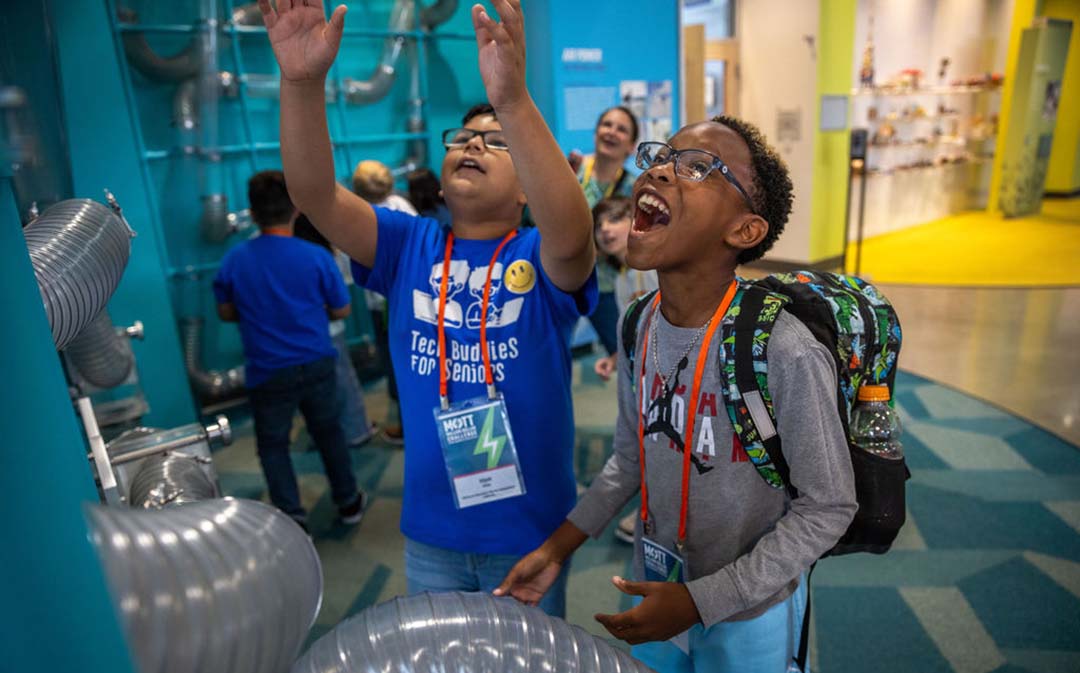
Jennings’ grandmother, Brenda, said she was struck by how quickly students and families bonded.
“I’m happy to be able to see the friendships that are being made,” she said.
For Presley Lobocki, a semifinalist in the 9-12 grade social solution category from Linden, Michigan, networking was also a highlight of the experience.
“I liked meeting all the different people, different businesses. … It’s been really fun,” she said in an interview with local news station WJRT ABC12.
Those connections are an important part of entrepreneurial experiences. When students come together around ideas, they exchange perspectives, support one another and begin building networks that could shape what they do next.
For some students, the connections extended beyond their peers. Zakaria Messelmani, a ninth grader from Tampa, Florida, garnered a finalist award and a total of $15,250 for his idea in the 9-12 business category inspired by his journey navigating the healthcare system.
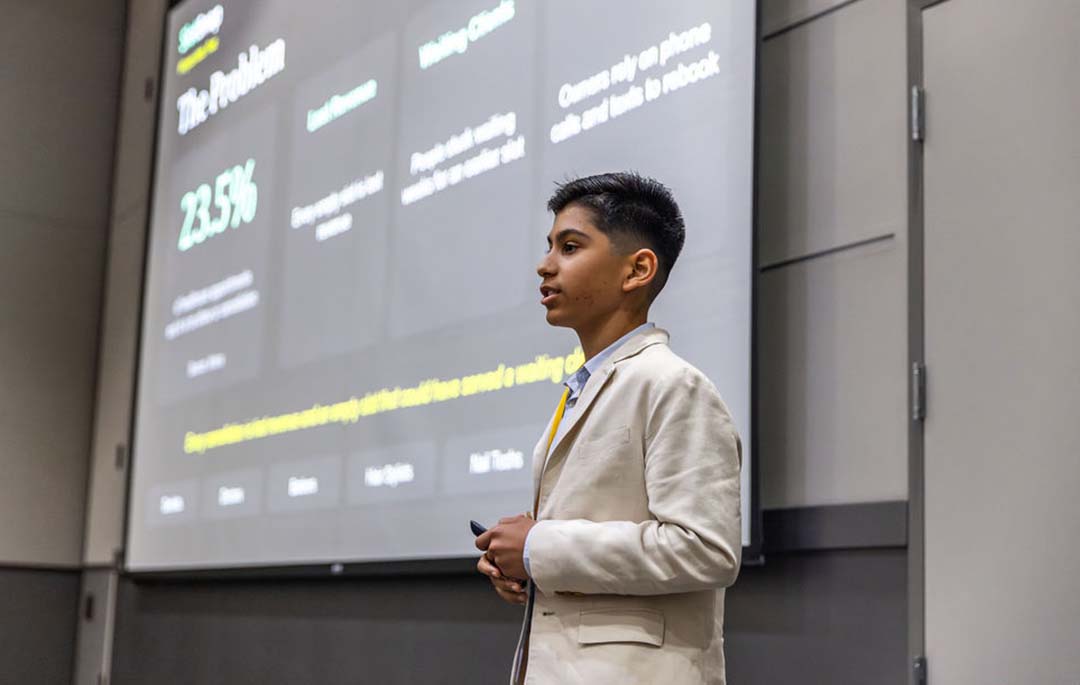
In 2024, days before his 13th birthday, he was diagnosed with acute lymphoblastic leukemia. Since then, he’s spent more time than most people traveling to medical consultations and treatments — and learning firsthand how difficult it can be to get a timely appointment.
That experience led him to create SlotSnap, an app that alerts users when a business or clinic they’re interested in has a cancellation, allowing them to quickly claim the opening.
The idea caught the attention of Dr. Bobby Mukkamala, a renowned otolaryngologist, immediate past president of the American Medical Association and a Mott Foundation trustee, who also was diagnosed with cancer in 2024.
In a conversation with Mukkamala at the awards ceremony, Messelmani explained how clinics could use SlotSnap to improve access to health care.
These budding connections mirror the networks developed in the business world, where geographic concentrations of entrepreneurs in a single location can facilitate ideation, collaboration and access to resources.
Entrepreneurship prepares young people for an uncertain future
Over the past decade, the Mott Foundation has worked with youth entrepreneurship organizations, including the Network for Teaching Entrepreneurship, the Young Entrepreneur Institute and VentureLab, and partners in the afterschool field to expand access to entrepreneurial learning experiences for young people. Through that work, more than 900,000 students have participated in entrepreneurship programs supported by the Foundation.
The Mott Million Dollar Challenge reflected the power of those experiences: young people learning by doing. Students researched problems, designed solutions, and tested their ideas with the customers and communities they hoped to serve. Along the way, they practiced creativity, curiosity and empathy.
Funded by the Charles Stewart Mott Foundation as part of its centennial celebration, the Mott Million Dollar Challenge was administered by NFTE in collaboration with VentureLab, YEI, the Afterschool Alliance, Collaborative Communications and the 50 State Afterschool Network.